
For a wedding morning or a shared getting-ready session, plan real service durations and separate artists around a fixed ready time. The beauty appointment timeline: work back from ready shows its method and lets you keep the calculation.
Start with the one step that matters most
Build the routine around the day you actually have. For outdoor exposure, AAD recommends broad-spectrum, water-resistant SPF 30 or higher, alongside shade and protective clothing. Apply and reapply as directed; a hurried swipe is not a measured application.
Makeup is optional. Keep the few steps that are comfortable and useful rather than trying to fill every slot in a routine.
A short version for the morning you have
Choose familiar steps that suit your skin and the day,then follow the actual product directions. A moisturizer,sun-protection product and optional color items need not produce one fixed number of products. Keep sunscreen application and reapplication within its instructions; makeup remains optional.
Use layering and waiting instructions that apply to the products in your routine rather than treating thickness as a universal order. Prepare the ready items beforehand. A short list is useful when it removes unnecessary decisions,not when it rushes a required step or claims every person can finish in the same time.
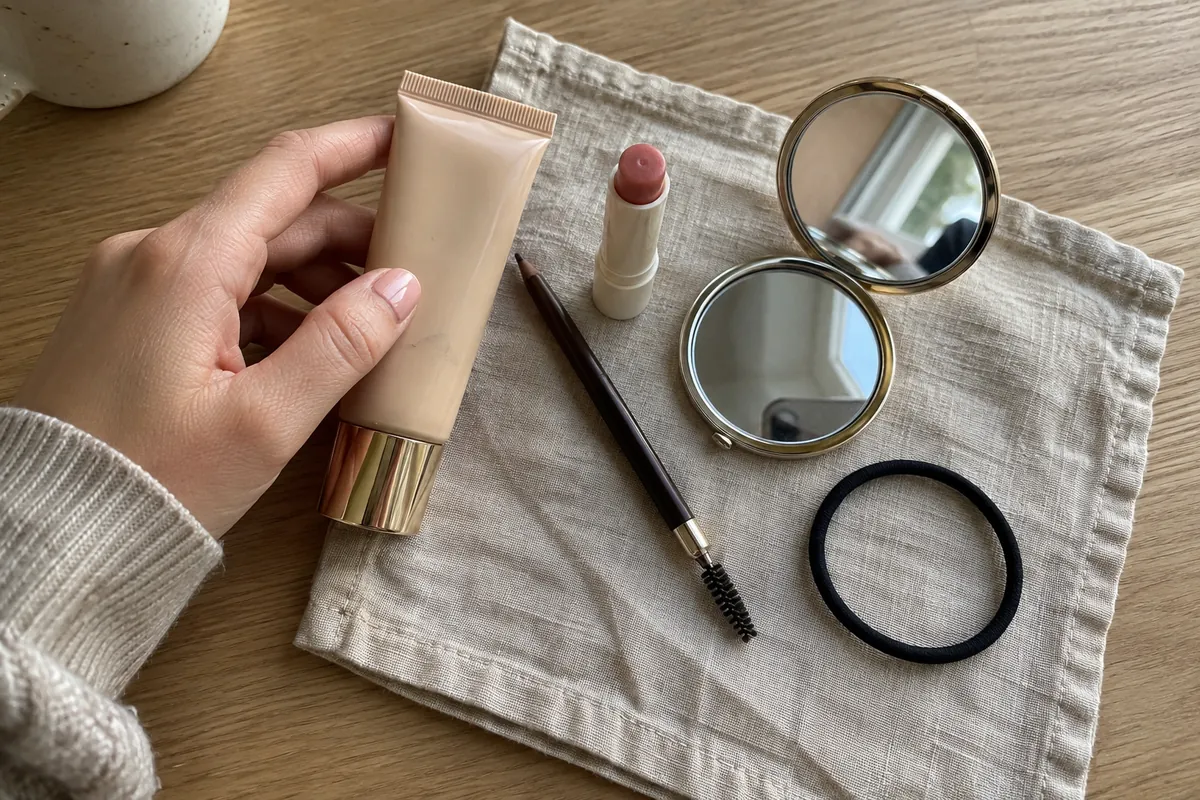
Products that earn their place
A tinted product or a cream colour may simplify the look if you like its finish. Do not assume one product performs every job simply because the name sounds versatile.
An active ingredient is optional. Keep a treatment you tolerate and have a reason to use; do not add retinol or vitamin C just to make a minimal routine look complete.
Where to save time, and where not to
Save time on the parts that people rarely see: a long, slow hair routine, blending a full-coverage base, or cleansing twice when the skin is dry. Do not cut sunscreen, a moisturiser suited to your skin type, or the cleansing step on nights you wear makeup.
Keep tomorrow’s few tools ready
Choose the small set of tools you actually use, then give each a clear place: clean and dry, waiting to wash, or drying. Put the wash after the last makeup application of the day rather than immediately before a rushed morning. A brush still drying is not ready merely because you need it.
If you need makeup before the tools are dry, use an appropriate clean alternative or simplify the look. Do not add a product just to keep the routine at a fixed number of steps. The brush-washing guide explains the method and drying setup without requiring a new collection of accessories.
Once everything is dry, pack only what you will use. Leave the rest clean at home. This turns maintenance into preparation for the next morning instead of adding another task between the alarm and the door.
Leave room to observe a new product
A short routine can make it easier to notice when something new does not agree with your skin. Introduce one product at a time when practical, keep its directions and stop if you develop a reaction. The new-product testing guide explains a small-area check and why a quiet test does not guarantee future tolerance.
Keep a simple opening-date note
A smaller routine is easier to review when each opened product has a date recorded on its container or in a short list. Follow the product’s storage directions and check for changes in color or smell; a quiet visual check cannot guarantee safety. The makeup replacement guide separates ordinary cosmetics from SPF products and eye-area products.
How do you keep a simple routine available while the pouch dries?
Set aside a few familiar items rather than repacking a damp pouch to keep to your morning schedule. A spare dry container can be a temporary organizing choice; it does not require a second set of cosmetics. Keep each product’s own storage directions in view.
| Before the next morning | Decision |
|---|---|
| Pouch care | Find the actual instructions before starting a wash |
| Drying time | Leave the pouch empty until all parts are ready |
| Temporary kit | Choose only closed, suitable products you expect to use |
The makeup bag cleaning guide separates caring for the lining from checking the products. That distinction keeps a storage task from becoming a reason to buy more or skip the manufacturer’s drying instructions.
Make a tool check shorter by keeping its instructions
A simple routine can include a brief check of the tools you actually use. Keep the model name and care directions available instead of searching for a new generic recipe each time. Review the working edge, finish permitted cleaning and leave any damaged item out of use.
| Check | Action |
|---|---|
| Known instruction | Save the model reference with the tool record |
| Observed damage | Pause use and ask about replacement |
| Unfinished drying | Keep the tool outside the ready-to-use kit |
A shorter routine does not require ignoring the manufacturer’s limits or buying a duplicate collection. Choose the few familiar items that are ready and suitable for the day. Keep eye irritation and other symptoms outside a cosmetic checklist: a tidy kit is an organizing result, not evidence that every product or tool is medically safe. The eyelash curler care guide provides two decision aids.
Which refill belongs in a ready-to-use small kit?
Keep a clearly identified case and its intended refill together in the routine record. A spare cartridge awaiting its matching case is not a usable lipstick for the next morning. The small kit can stay small while that question is clarified; an optional makeup step does not need a last-minute replacement.
| Record | Keep separately |
|---|---|
| Ready combination | Named case/refill pairing and normal intended use |
| Stored spare | Own label and product-specific storage directions retained |
| Unresolved match | Question recorded before another cartridge is ordered |
Use the lipstick compatibility check before counting a refill as an available step. Retain the exact family and generation rather than shopping from the brand name alone. If you change shades within a supported system, keep each cartridge’s identity and use history. Preparation should reduce the morning search, not hide uncertain parts in a smaller pouch. Choose the few familiar, ready items that suit your day and leave unnecessary steps optional.
How much time do you really have?
Questions people ask
What is the minimum routine for healthy skin?
Sunscreen every morning and a moisturiser that suits your skin. Cleansing at night is the next most important step, especially when you wear makeup.
Can I skip moisturiser if I have oily skin?
Choose by comfort and the rest of your routine. If you need a moisturiser, a lighter texture may suit you; oiliness does not prove that more products will help.
Do I need a separate eye cream?
Not necessarily. Use only products intended for the area and follow their directions. A stinging moisturiser is a reason to stop and reconsider it.
Sources and further reading
- American Academy of Dermatology: sunscreen FAQs
- American Academy of Dermatology: testing skin care products
Sources checked 2026-10-25.