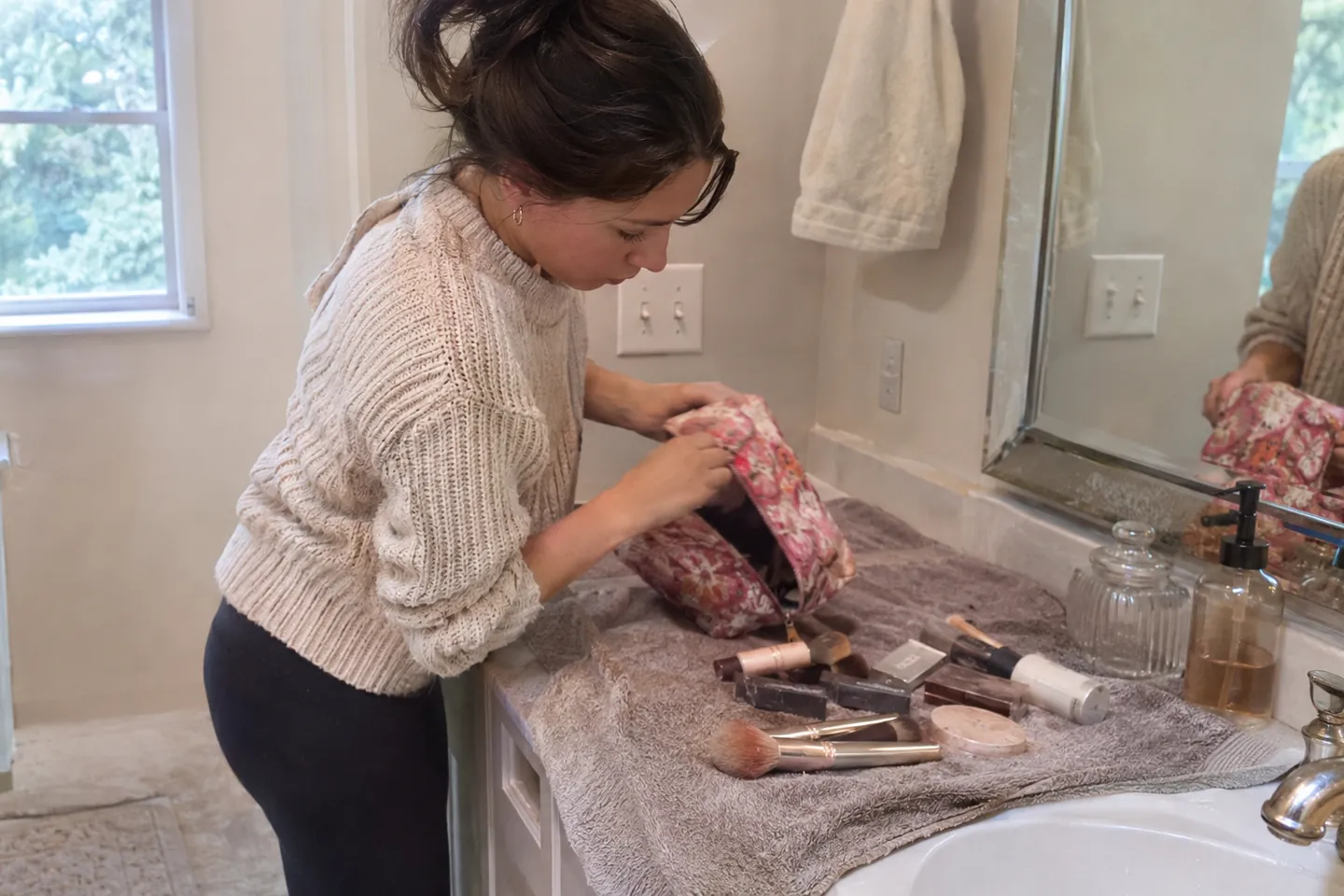
What should you do before cleaning the bag?
Take every item out, including dividers or pockets you can detach without forcing them. Put the contents on a clean, dry surface while you inspect the empty pouch. This makes a leaking tube easier to spot than wiping around a full collection.
Keep three questions separate: what happened to the bag, what happened to the packaging, and whether the cosmetic is still suitable for use. A loose cap, a cracked tube and a powder spill need different decisions. Do not return escaped product to its container or add water to a cosmetic to make it usable again.
Which parts of the bag need a care check?
Read the label or the maker’s instructions for the exact model. Check the outer surface, inner lining and trim before choosing water or a cleaner. A fabric exterior does not tell you whether a bonded lining, printed finish or padded insert can tolerate the same treatment.
| Zone | Question for the instructions |
|---|---|
| Outer surface | Is wiping, spot cleaning or washing specified? |
| Lining and pockets | Are they removable, coated or padded? |
| Trim and closure | Are there separate care limits for the zip, print or hardware? |
CALPAK’s own FAQ gives non-luggage care advice using a lightly dampened white towel and air drying, while warning that some marks may remain. That is an example of brand-specific guidance, not a universal recipe for another manufacturer’s bag.
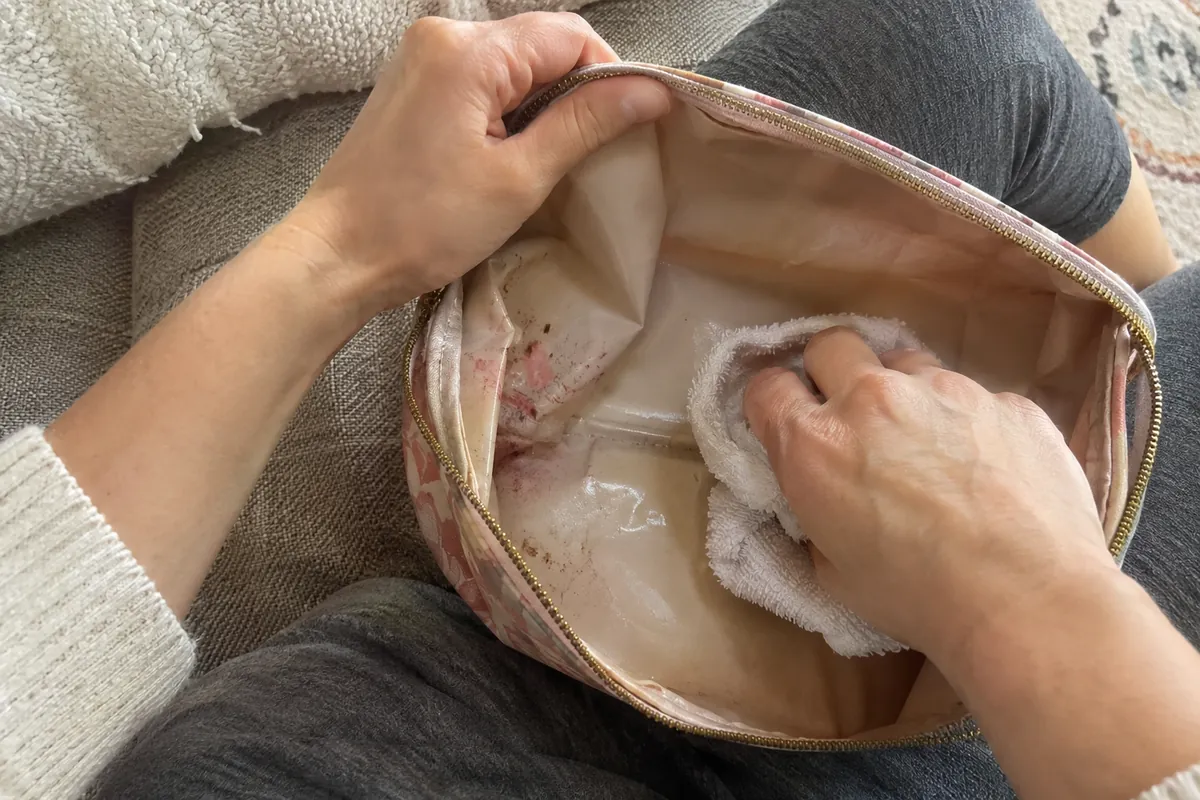
How do you deal with loose powder?
Remove loose particles before introducing moisture, provided the care instructions allow that handling. Open the empty pouch over a waste container and gently release accessible debris; avoid grinding powder farther into a seam. Do not turn a fixed lining inside out by force.
Check the powder compact separately for damage. A cleaner-looking pouch does not answer whether a broken container can close securely or whether the product has been contaminated. Use the makeup replacement guide for product age and storage questions rather than treating a bag-cleaning session as a safety inspection.
What should you do about spilled foundation?
Stop the source of the leak before cleaning the affected surface. Follow the bag maker’s approved method and the cleaner’s directions; do not assume that a makeup remover suitable for skin is suitable for the lining, print or coating.
If the instructions call for a small-area compatibility check, follow them before treating the visible mark. Avoid layering solvents or household cleaning mixtures when the first attempt fails. A faint stain can remain after appropriate care; escalating the chemistry simply to make it disappear may damage the pouch. Ask the maker about an unresolved mark instead.
Can a makeup bag go in the washing machine?
Use a machine only when the instructions for that complete bag permit it. “Nylon,” “cotton” or “water-resistant” alone does not specify a wash cycle, temperature or drying method. Keep detachable parts within their own care limits rather than assuming the permission covers every insert.
Without clear directions, pause before soaking the pouch or putting it in a machine. Find the model information or ask its manufacturer. This guide does not prescribe one detergent dose or wash temperature for a collection of different materials.
When can you put the products back?
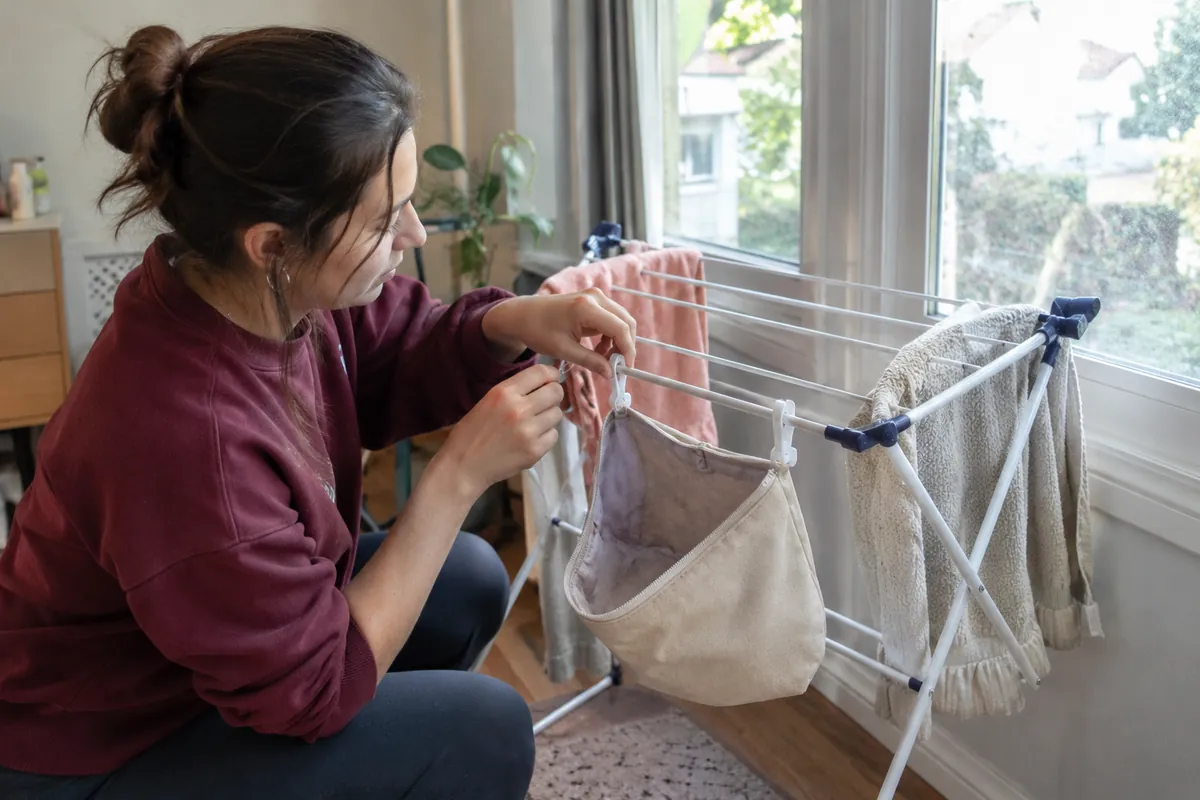
Repack only when the bag and the items you intend to store are dry and ready. Inspect corners and pockets rather than checking only the exposed outer fabric. Follow the maker’s drying instructions instead of applying direct heat to finish faster.
Keep the tool routine separate: the brush-cleaning guide explains drying brushes before storage. The FDA advises following cosmetic manufacturers’ storage instructions and keeping containers clean. Packing a cleaned bag is not permission to ignore an individual product’s temperature, moisture or closure requirements.
What if the lining still smells or is peeling?
Leave the bag out of service while you establish the cause and the permitted next step. A persistent odor or damaged lining is a reason to ask the manufacturer about cleaning, repair or replacement; it is not a diagnosis of a particular microorganism.
A practical spare pouch can keep the routine moving while the first one dries or awaits advice. It does not have to hold a duplicate collection. Choose the few familiar items you use, as in the low-maintenance routine, and keep their labels available. The goal is a manageable kit, not a claim that home cleaning sterilizes it.
Keep curler readiness separate from pouch readiness
A clean pouch is only one part of putting the kit back together. A used eyelash curler still needs its own model-specific care and condition check. Conversely, cleaning the tool does not remove residue from a pouch lining. Finish both tasks before treating storage as ready.
| Check | Action |
|---|---|
| Pouch | Permitted care complete and every part dry |
| Curler | Frame and cushion checked under its own directions |
| Repacking | Keep tools awaiting care separate from ready items |
Do not use the pouch’s washing method on the tool or infer that a damp recess is ready because the metal frame feels dry. Identify the model before choosing a liquid or removing the cushion. A separate temporary dry container can help organize ready items without pretending that unfinished care has been completed. The eyelash curler care guide provides two decision aids.
Retain product identity before reorganizing the pouch
Before throwing away a damaged carton or repacking a small kit, check whether you still have the product name, variant and instructions you need. A clean pouch and a product with an identifiable history are separate tasks. Keep useful packaging information with the correct item.
| Record | Keep separate |
|---|---|
| Original product | Exact name, shade or size and its own instructions |
| Marking | A clear view with its location and surrounding wording |
| Uncertainty | An unreadable character, conflicting label or missing information |
Do not merge codes from different products into a single note, and do not transfer cosmetics into unlabelled containers to save room. A photograph can preserve context without claiming that you have decoded a production date. If the item itself is leaking or unidentified, resolve that question separately from cleaning the bag and putting the rest of the kit back. Use the batch-code and barcode comparison for the different marks and next questions.
What if a pump container is leaking inside the pouch?
Remove the affected container from the ready kit before cleaning the pouch according to its own care instructions. Keep the product’s name, label and a record of the visible leak together. A clean lining does not show that the container will close or dispense as intended next time.
| Keep separate | Information |
|---|---|
| Pouch | Its permitted cleaning method and complete drying |
| Container | Visible crack, leakage or closure issue to ask the brand about |
| Product record | Exact item, markings and the problem already observed |
Do not put a damaged unit back simply because you wiped its outside. Nor should you rinse a filled pump through the bag-cleaning process. Keep cleaning liquids out of the product and follow only the applicable container instructions. If the brand cannot yet clarify the fault, leave that item out of the ready kit and retain its information for the next support step. A second bag cannot resolve an unidentified leak. The airless-pump observation and support guide organizes the product-specific questions.
Does cleaning the pouch also prepare a refillable lipstick case?
Read the case’s own care instructions separately from the pouch label. A fabric bag and a lipstick’s moving mechanism do not have the same construction. Emptying the kit is a useful time to record which case belongs with which cartridge, before small parts become separated from their labels.
| Record | Keep separately |
|---|---|
| Pouch | Its permitted care and complete drying |
| Outer case | The exact model’s cleaning and handling directions |
| Refill cartridge | Its identity, storage and intended case pairing |
The case-and-refill compatibility guide helps retain that pairing without assuming every same-brand replacement fits. Do not soak a mechanism or spray a cleaner through it just because the bag can be wiped. Keep the cosmetic away from the bag-cleaning process and retain its own information. A visually clean case does not establish compatibility or renew a product’s history. Repack identified, ready items and leave an unresolved pairing separate until its instructions are clear.
Keep sponge drying outside the bag-cleaning job
Emptying and cleaning the container does not establish that every tool is ready to return. Separate the sponge, its holder and the bag into three care tasks. Read the sponge’s instructions for cleaning and complete drying, and the holder’s instructions for any removable parts. A vented design does not by itself prove a damp sponge has dried throughout.
| Item | Check |
|---|---|
| Bag lining | Clean and dry according to its material |
| Sponge | Its own care and drying completed |
| Holder | No trapped moisture or old residue |
Do not use a sealed makeup pocket as the drying space just because it protects the tool from dust. Schedule cleaning early enough to allow the stated care process, or carry a suitable clean alternative. The wet-or-dry sponge guide explains why damp application and dry storage are different decisions. Keep any still-drying accessory out of the packed bag.
Choose the care route
The bag says spot clean only
Treat only the permitted area by the stated method. Do not turn spot-clean permission into a full soak.
The complete bag is explicitly washable
Use the specified method and check separate instructions for removable parts, trim and drying.
The instruction is missing or unclear
Identify the model and ask the maker. Material names alone do not establish washability.
Decide what happens before repacking
Loose powder, no obvious package damage
Remove accessible loose debris by an allowed method, then review the compact separately.
A tube is leaking
Keep it out of the pouch and resolve the packaging problem before considering repacking.
The lining remains damp, damaged or smelly
Leave the pouch empty. Finish permitted drying or ask about the unresolved condition before reuse.
Questions people ask
Does a fabric makeup bag have to be machine washable?
No. Check the complete bag’s care instructions, including its lining, padding and trim. The outer fiber name alone is insufficient.
Can I use alcohol or acetone on any lining?
Do not assume compatibility. Use only a method permitted for the actual bag and its finishes; ask the maker when the instructions are unclear.
Does cleaning the pouch renew old makeup?
No. Evaluate the product’s label, age, condition and storage separately. A clean bag does not reset any of them.
How often must every makeup bag be washed?
There is no schedule established here for every material and use. Respond to spills and condition, following the bag’s actual instructions.
Can a damp brush go into the clean bag?
Let the brush dry as directed before storage. A cleaned pouch does not replace the tool’s own drying step.
Is a remaining stain proof the bag is unsafe?
Appearance alone cannot establish safety. Ask about unresolved damage or odor; do not claim sterilization from home cleaning.
Sources and further reading
- CALPAK: product care FAQ
- FDA: microbiological safety and cosmetics
- FDA: shelf life and expiration dating
Sources checked 2026-10-30.