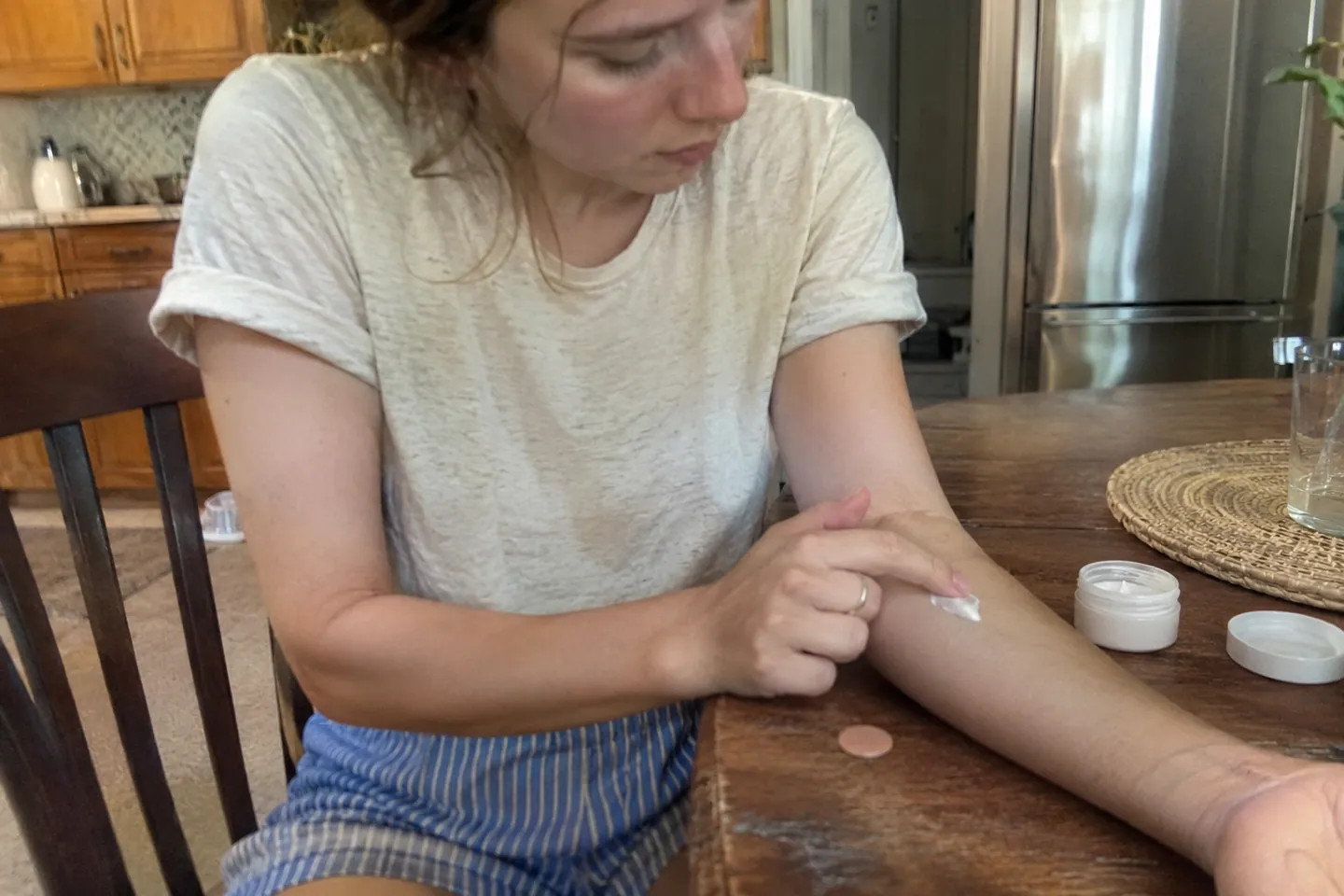
What a home spot test can and cannot tell you
A small-area test gives you a way to observe how your skin responds to a product before you use it more widely. It is not a diagnosis, and a quiet test area does not guarantee that a reaction cannot appear later. If you have had a severe reaction to a product or ingredient, ask a healthcare professional before trying it again.
The American Academy of Dermatology (AAD) explains a home method for ordinary skin-care products and separately describes clinical patch testing for people with a persistent or recurrent rash. The two processes have different purposes. A dermatologist may use a range of carefully selected substances and read the results over several days; a home product check cannot identify the cause of an allergy.
Read the directions for this product first
Keep the package or a photograph of its directions. A rinse-off cleanser should not be left on as if it were a leave-on moisturizer. A peel, hair dye or professional treatment can have different safety instructions; the general skin-care routine below is not a substitute for those instructions. The FDA specifically advises following hair-dye directions and performing the product's recommended test before use.
Do not deliberately apply a new product to broken, already irritated or infected skin. If you are being treated for a skin condition, have a history of strong reactions, or are unsure where to test, ask your clinician for advice rather than improvising.
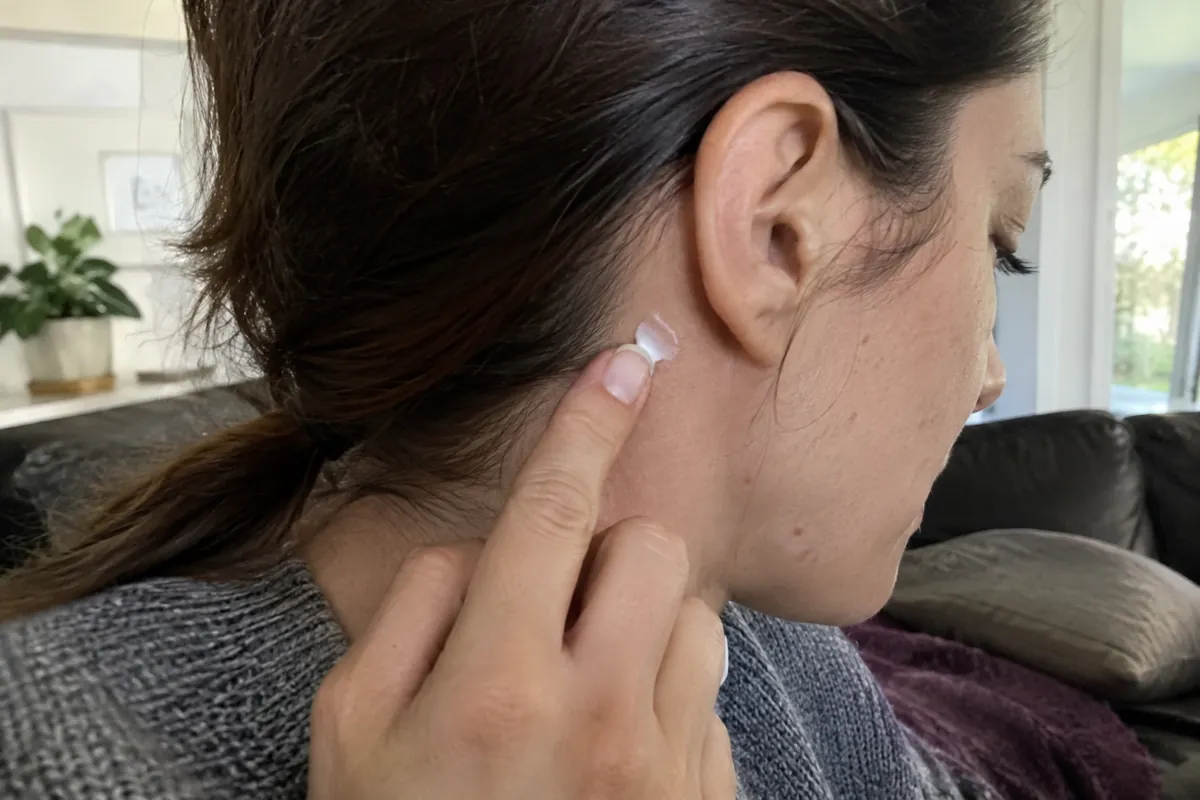
Use a small, repeatable test area
The AAD suggests applying an ordinary skin-care product to a small test spot, such as the underside of the arm or the bend of the elbow, twice daily for seven to ten days. Use the amount and contact time consistent with the product's directions. For a cleanser, wash it off when the label says to; do not leave it on for the whole observation period.
Choose a place you can observe consistently. Keep other new products away from that spot so a change is easier to notice. Note the product name, the date, the location and any symptoms. Avoid interpreting a single quiet day as the end of the process: reactions can take time to appear.
What if your skin reacts?
Stop using the product if the test area becomes red, itchy, swollen or otherwise uncomfortable, and wash it off. The AAD recommends not using a product that causes a reaction. If symptoms are significant, persist or recur, seek advice from a healthcare professional; keep the product and ingredient list so you can show them what you used.
Severe symptoms such as trouble breathing or swelling involving the mouth or throat require immediate emergency care. Do not repeat a product test to confirm a severe reaction. If you have a longstanding or unexplained rash, a dermatologist can advise whether clinical patch testing is appropriate.
Keep the result in context
A negative home test is not a certificate of safety. The area tested, how a product is used and changes in your skin can all matter. Introduce one new product at a time when practical, follow its label and pay attention to your skin after you begin using it normally.
If you are planning a salon procedure, bring your notes and ask what products will be used. Our salon questions guide can help you prepare for that conversation. Our chemical-peel guide explains why a professional procedure has its own preparation and recovery considerations.
Questions to keep with your notes
- Is this a leave-on or rinse-off product, and what does its label say?
- Where did I apply it, and when did I start?
- Did I notice itching, redness, swelling or another change?
- Have I had a previous reaction that should be discussed with a clinician?
- Do I have the ingredient list available if I need advice?
The AAD's patient guidance on testing skin-care products and its explanation of clinical patch testing are the primary sources for this guide. FDA consumer guidance provides the separate hair-dye example. A simple routine and careful notes can support a decision; they cannot replace individual medical advice when a reaction occurs.
A skin test does not extend product life
A small-area check cannot make an expired, damaged or suspicious product suitable for use. Read the label and note when it was opened, then follow the product’s instructions; stop if you experience a reaction. The makeup replacement guide covers age and storage as separate questions from a home skin check.
A familiar mixing partner does not make a new formula familiar
When a product is designed to be mixed with moisturizer, record both the exact added product and the moisturizer used. Having used one part of the combination before does not establish how you will respond to the new formula. Read its own warnings, intended area and any supplied testing directions. Do not borrow a dose or mixing method from an older bottle merely because the brand name matches.
Keep the product identity with your observations so a later question can be answered precisely. Note which version you used and the relevant application instructions instead of recording only that you tried drops or mousse. A cosmetic color change and discomfort are different observations; the expected tanning effect is not a reason to ignore a new unwanted response. No reassuring result from a limited home check guarantees future tolerance. If the instructions conflict or remain unclear, ask the maker about the exact formula before adding another variable to the routine. The mousse-versus-drops guide separates preparation, tools and timing.
Before trying a new product
0 of 5 done
Questions people ask
Does a quiet test prove I cannot react later?
No. A home spot test cannot guarantee that a reaction will never happen or diagnose an allergy.
Can I leave a cleanser on all day?
No. Use the contact time specified by the product; the AAD explains that wash-off products should be removed as directed.
Is this the same as a dermatologist patch test?
No. Clinical patch testing is a diagnostic process arranged and interpreted by a clinician.
What if I previously had a severe reaction?
Do not repeat the product test to confirm it. Ask a healthcare professional for advice.
Sources and further reading
Sources checked 2026-10-27.