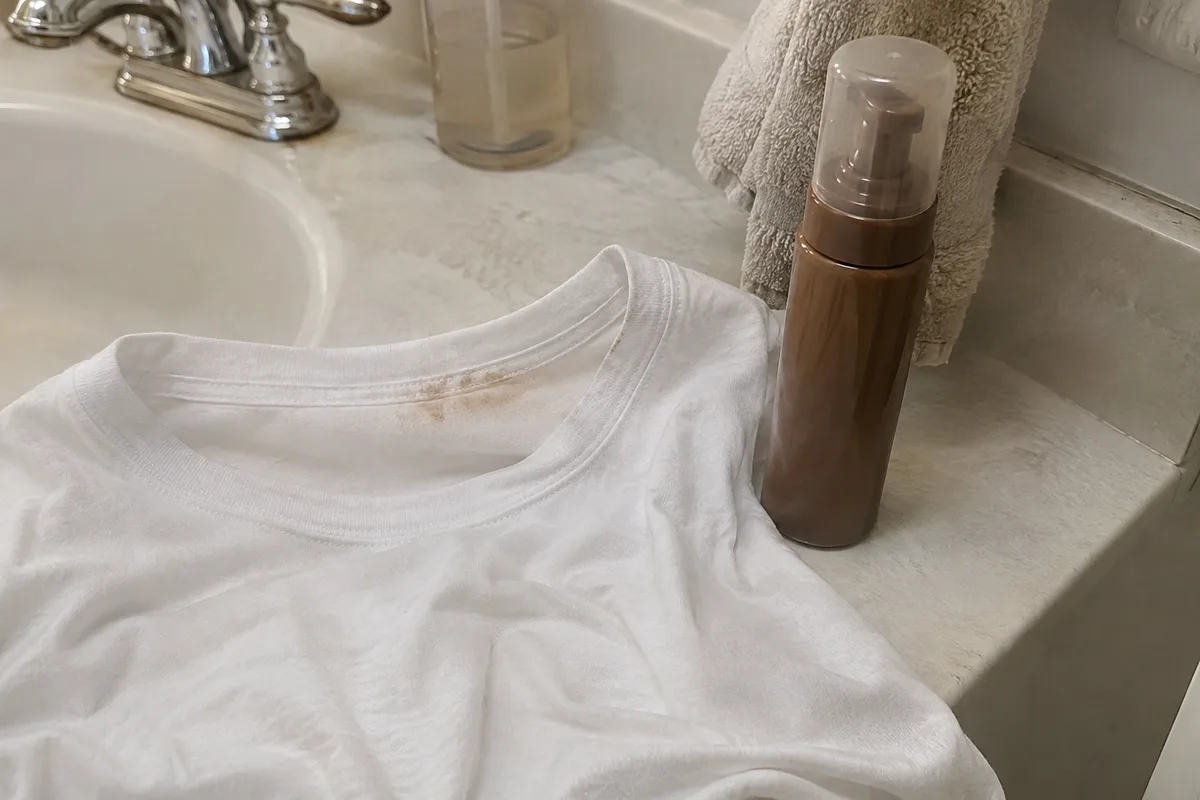
Read the exact formula before choosing the clothes
A tinted mousse, clear developing formula and instant wash-off bronzer can have different instructions. Record the complete product name and the version you own. A familiar brand name does not establish a shared drying period, rinse method or transfer claim across the range.
Bondi Sands' Australian tanning-robe page recommends loose, dark clothing after application. Treat that as a maker's clothing recommendation rather than a guarantee that every dark material will remain unmarked. Decide what you are comfortable wearing for that stage and keep an important outfit away from the preparation area.
Drying and development answer different questions
A surface feeling dry does not replace the formula's development or rinse directions. Follow the steps supplied with the actual product, including any instruction about water or dressing. Do not shorten a required wait because you want to put on a particular blouse, or extend a rinse time solely to try to prevent a mark.
St.Tropez's Purity Body Mousse page makes its own no-transfer claim for that named formula. It is not evidence that every clear product has the same result on every textile. Keep a manufacturer's claim attached to the product it describes; this guide does not report a physical transfer test.
Map where the garment meets skin and equipment
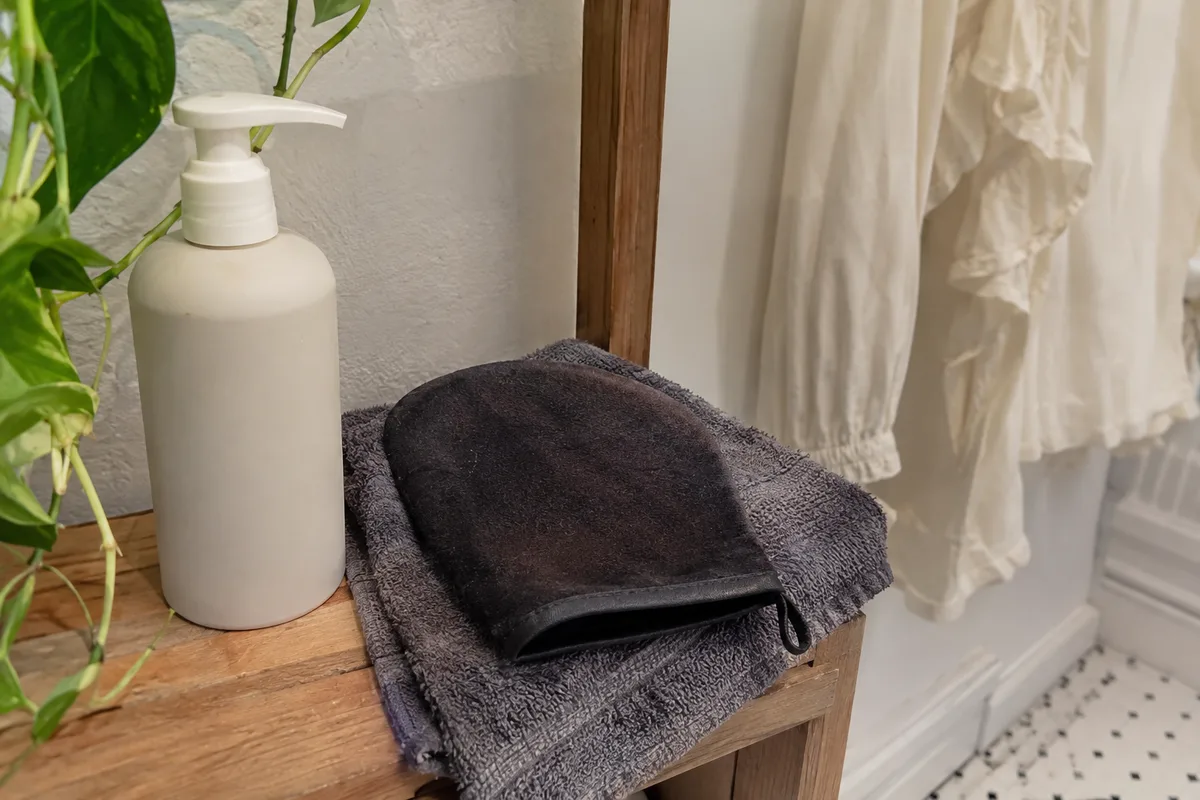
Look at the inside neckline, armholes, waist and other contact points in the outfit you intend to wear. Close-fitting sections and the dressing motion can bring fabric against the application area. A loose outer layer can still have a narrow cuff or collar, so the word loose is not the whole check.
Keep mitts, brushes and open containers on a suitable separate surface. A mark on a shirt can come from a tool or hand during dressing as well as from later contact. Record what happened without treating its location as proof of a single cause.
| Question | Where to find the answer |
|---|---|
| When can I dress or rinse? | The exact tanning formula instructions |
| Where will fabric touch? | The actual outfit and dressing sequence |
| How can this garment be treated? | Its care label and suitable textile advice |
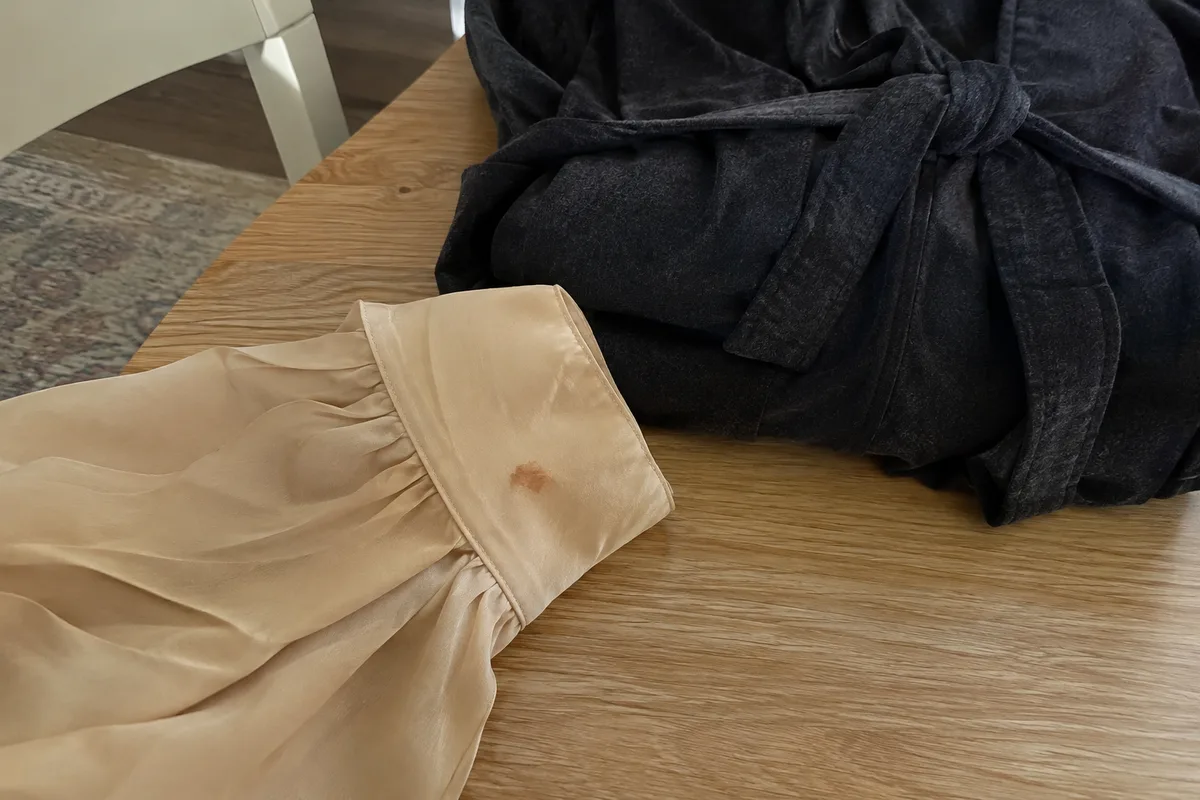
If a mark appears, identify the garment before treatment
Read the fiber and care label before adding water, detergent, bleach or heat. GINETEX's care-symbol guide distinguishes washing, bleaching, drying and other processes. Permission for one process is not permission for every stain-removal method suggested online.
Do not rub an unfamiliar cleaner into delicate cloth or use a skin self-tan remover as a garment cleaner unless its instructions explicitly cover that use. If the garment is valuable, labeled for professional care or unclear, show the mark and product identity to a suitable cleaner. No universal removal outcome follows from the color of the stain.
Do not confuse a clothing mark with the developed shade
A visible application tint and the later appearance on skin answer different questions. The guide-color explainer separates those stages. A mark on fabric cannot quantify how much color remains on skin or tell you that another layer of product is needed.
If you keep a record for the manufacturer, note the formula, application and rinse timing, clothing material and contact involved. Avoid naming a garment stain as proof that the cosmetic has expired or is counterfeit. Those questions need product-specific evidence, not an inference from one photograph.
Plan appointments and outfit changes independently
If your day includes a service or another body-care appointment, ask the provider about products allowed beforehand and the clothes needed afterward. Do not combine aftercare routines from unrelated services. Our infrared-service guide keeps provider questions separate from cosmetic appearance claims.
The body-image and tanning guide also treats tanning as an optional appearance choice. Leaving it out when the schedule is awkward is a valid option. A workable routine should not depend on rushing unfamiliar instructions to protect an event outfit.
Which instruction do you need?
The formula is still developing
Use that product’s schedule rather than judging from touch alone.
I want to wear a delicate pale outfit
Plan a separate preparation outfit and check the product directions first.
A mark is already on the garment
Identify the textile care requirements before treatment.
Keep the next step specific
A clear formula has a transfer claim
Keep the claim attached to that named product, not every clear cosmetic.
I found a skin remover
Do not assume it is a textile cleaner.
I cannot identify the care label
Ask the garment maker or a suitable professional cleaner.
Questions people ask
Does dry to the touch mean transfer is impossible?
It does not replace the product directions or establish a result on every garment.
Will every mark wash out?
No universal removal result is promised. The formula and textile both matter.
Can I use self-tan remover on clothing?
Only if the instructions explicitly cover that textile use.
Does dark clothing prevent all marks?
A clothing recommendation is not a guarantee for every material.
Does a clothing mark tell me to reapply?
No. Assess the cosmetic result according to its own directions.
Sources and further reading
- Bondi Sands Australia: clothing recommendation
- St.Tropez US: named Purity formula claims
- GINETEX: textile care processes
Sources checked 2026-10-25.