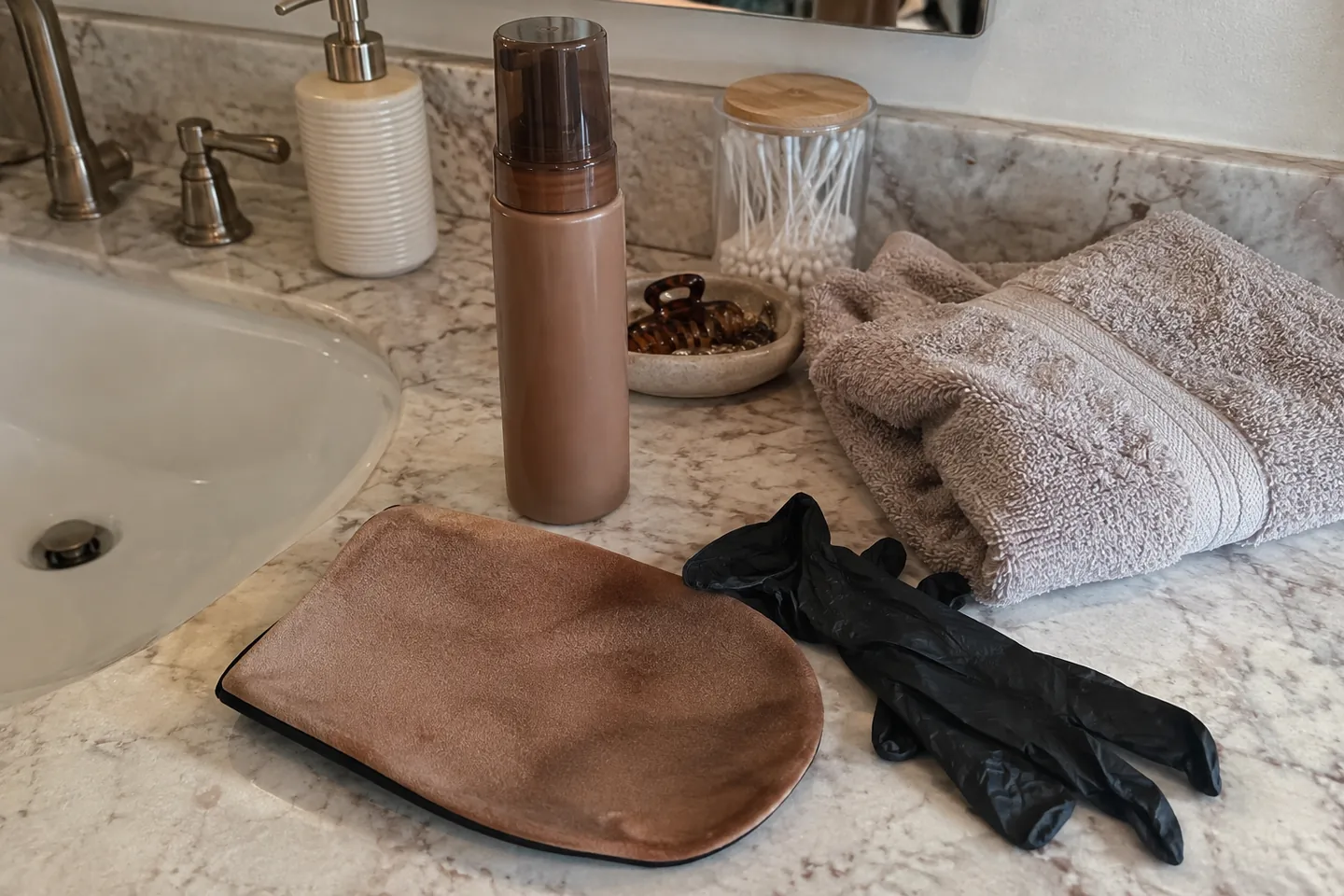
What the colour means
DHA reacts with amino acids at the skin's surface. Development and rinse times vary by formula: follow the label instead of treating four to eight hours as a rule for every product. A guide colour may also wash away differently from the developed colour.
Choose a format you can control
Compare lotion, mousse or another format by its instructions, feel and how easily you apply it. FDA limits DHA to external application: avoid eyes, lips and mucous membranes, and do not inhale or ingest spray. Ventilation alone does not establish that exposure is safe.
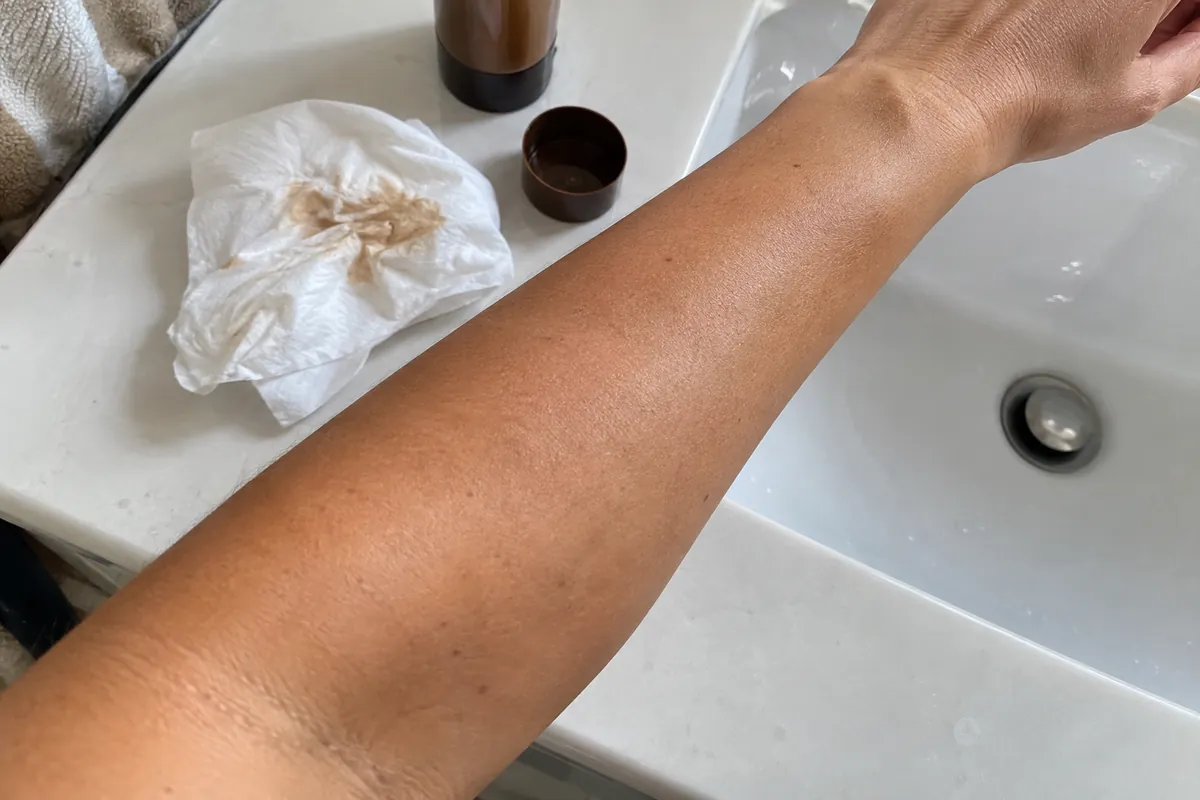
Test without changing the formula
A small-area test can help reveal an unwanted reaction or colour, but it cannot guarantee that a full application will suit you. Follow testing directions. Do not dilute a formula or mix it with moisturiser unless the manufacturer says to do so.
Preparation follows the label
Use the product's own preparation and aftercare directions. Dry patches, rubbing and uneven application may change the finish. For the next steps, see our aftercare guide. Continue normal sun protection: a cosmetic tan is not a sunscreen.
Which self-tan fits your week?
Questions people ask
How long does a self-tan last?
It varies with the formula, application and skin. Use the manufacturer's guidance instead of treating a set number of days as a guarantee.
Does self-tan protect against sun?
No. It does not provide meaningful sun protection, so keep using sunscreen outdoors.
Why did my tan turn orange?
Colour can vary with the formula and application. Let it develop as directed before deciding, and do not mix or overapply it to try to correct the shade.
Sources and further reading
Sources checked 2026-10-25.