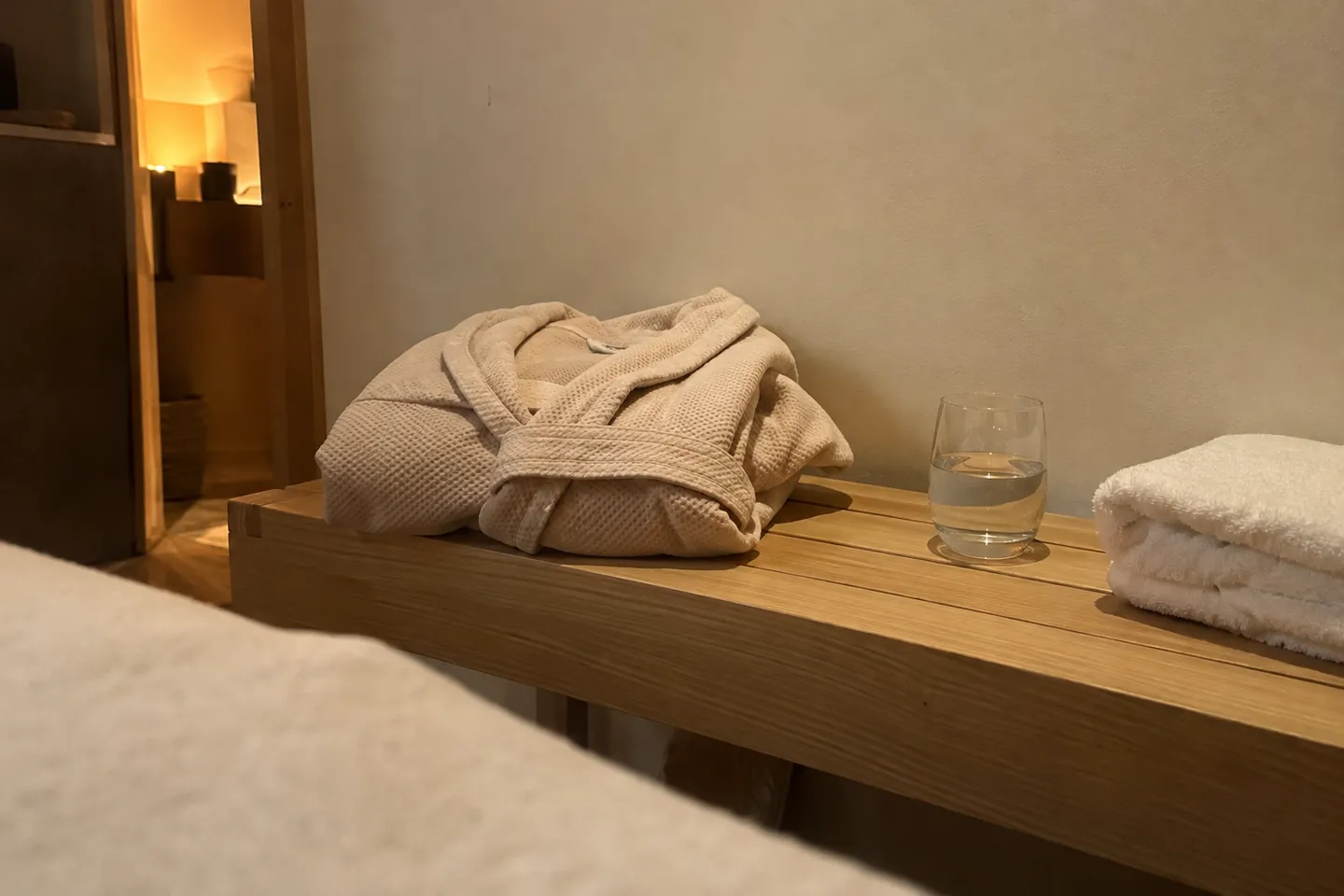
What infrared heat does in the body
Infrared lamps and cabins warm the body from the outside. Far-infrared wavelengths penetrate the skin more shallowly than they do deeper tissue, so the warmth is felt most in the skin and superficial layers. The body responds the way it does in any warm room: blood vessels widen, the heart rate rises a little and you sweat.
That sweat is real, but it is mostly water and salts. The weight that disappears on the scale after a session returns as soon as you drink. Calorie claims such as burning 600 calories in half an hour come from equipment estimates and simple heart-rate arithmetic, not from measured fat loss.
What the studies support
The strongest results in the literature involve people with muscle soreness or stiffness, who report short-term relief after a warm session. Several small trials on sauna-style heat also suggest modest improvements in heart-related markers in people who sit in regular sessions, though those trials use heat levels and durations that do not map neatly onto a salon booking.
Claims about detoxing, reducing cellulite and reshaping the body are weaker. Cellulite is a structural feature of fat and connective tissue, and no session changes that structure in a lasting way. Short-term smoothing of the skin after heat and massage is common and fades within days.
How to compare sessions
Heat is not measured the same way across facilities. Ask the temperature range, the session length, and whether the room is infrared lamp, cabin or a combined bed. A 20-minute session at a moderate heat is a different experience from 45 minutes at high intensity, even when both are sold under the same name.
Price per session matters more than the bundle price if you plan to go less than weekly. A package that looks cheap often assumes sessions you will never book.
Who should skip it
Heat exposure is not a good idea for everyone. Skip it, or check first with a doctor, if you are pregnant, have heart disease or a history of fainting, have uncontrolled blood pressure, take medicines that affect sweating or fluid balance, or have skin conditions that heat makes worse. Drink water before and after, leave the session if you feel dizzy, and avoid alcohol on the same day.
Is infrared heat a sensible step for you?
Questions people ask
Does infrared heat burn fat?
It raises heart rate and makes you sweat, which uses a little energy, but the amount is small. Sweat is water and does not equal fat loss.
How many sessions does it take to feel a difference?
Many people notice warmth and relaxation the same day. Muscle comfort can improve over a few weeks of regular sessions, and that is the outcome the research is most consistent about.
Can I use infrared heat with a self-tan or lotion?
Wash off products first and wait until the skin is cool. Heat opens the pores, so applying body products beforehand can cause irritation.