Three color questions belong to different stages
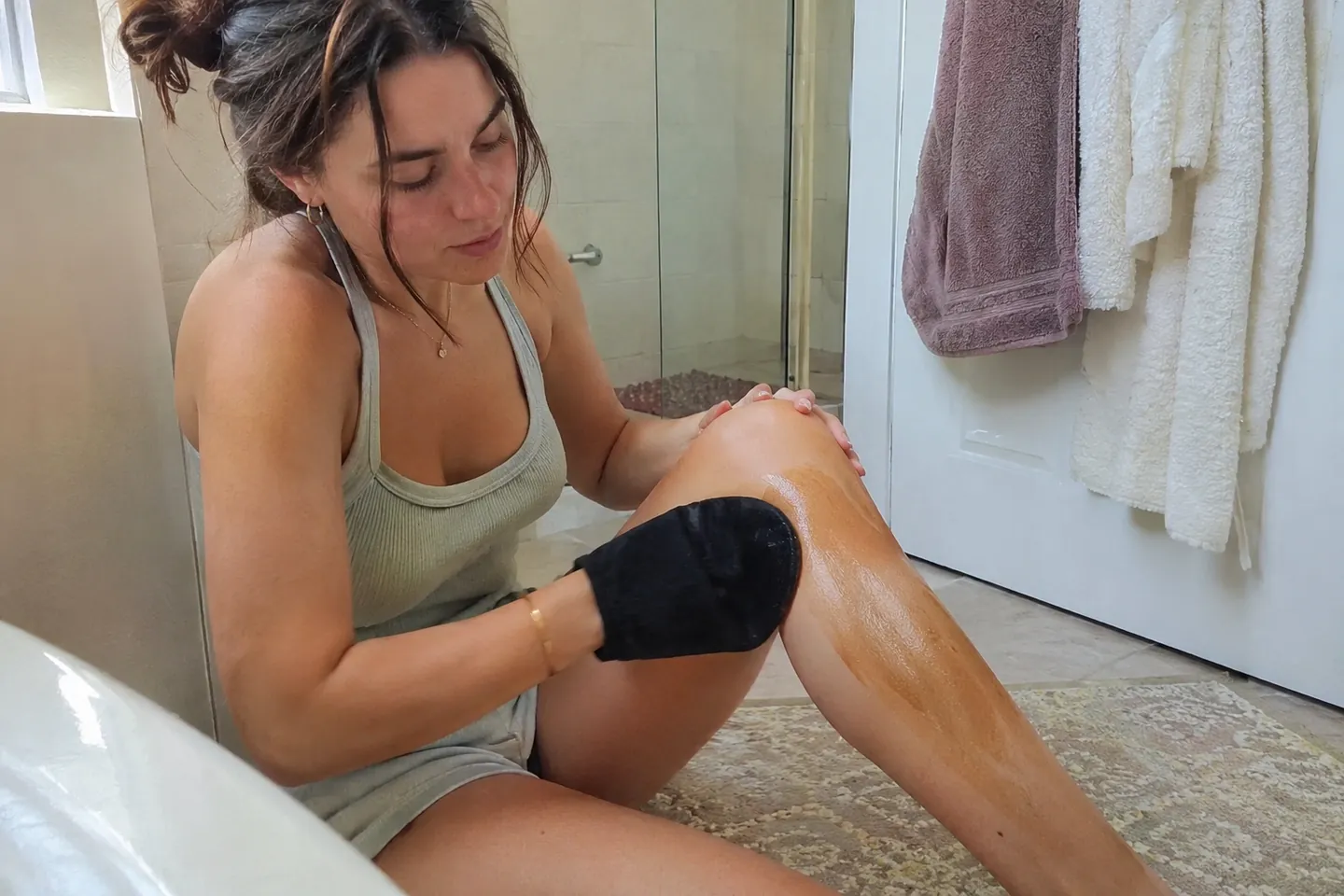
Before applying a self-tanner, distinguish the appearance of the product, a visible application guide and the result after the instructed development period. Those stages can look different. A tinted product on a mitt is not a calibrated shade sample for your skin, and the first mirror view is not necessarily the comparison the maker intends.
Record the full formula name before asking why a color changed. Instant wash-off bronzer, a developing self-tanner with tint and a clear formula are different product descriptions. Do not combine instructions because their bottles share a brand or because all three are described casually as tan.
Check whether this formula has a guide tint
St.Tropez's UK FAQ distinguishes ranges with a guide color from ranges without one. This is a useful reminder to identify the named formula rather than assuming every mousse or every gradual product behaves identically. A regional FAQ is not proof that a bottle sold elsewhere has the same current directions.
Isle of Paradise also lists clear and tinted options in its mousse collection. Clear appearance changes the visual application cue; it does not by itself establish a particular final shade, skin response or garment-care outcome. Read claims and directions for the exact product you own instead of assigning results from its appearance alone.
Keep drying, rinsing and development separate
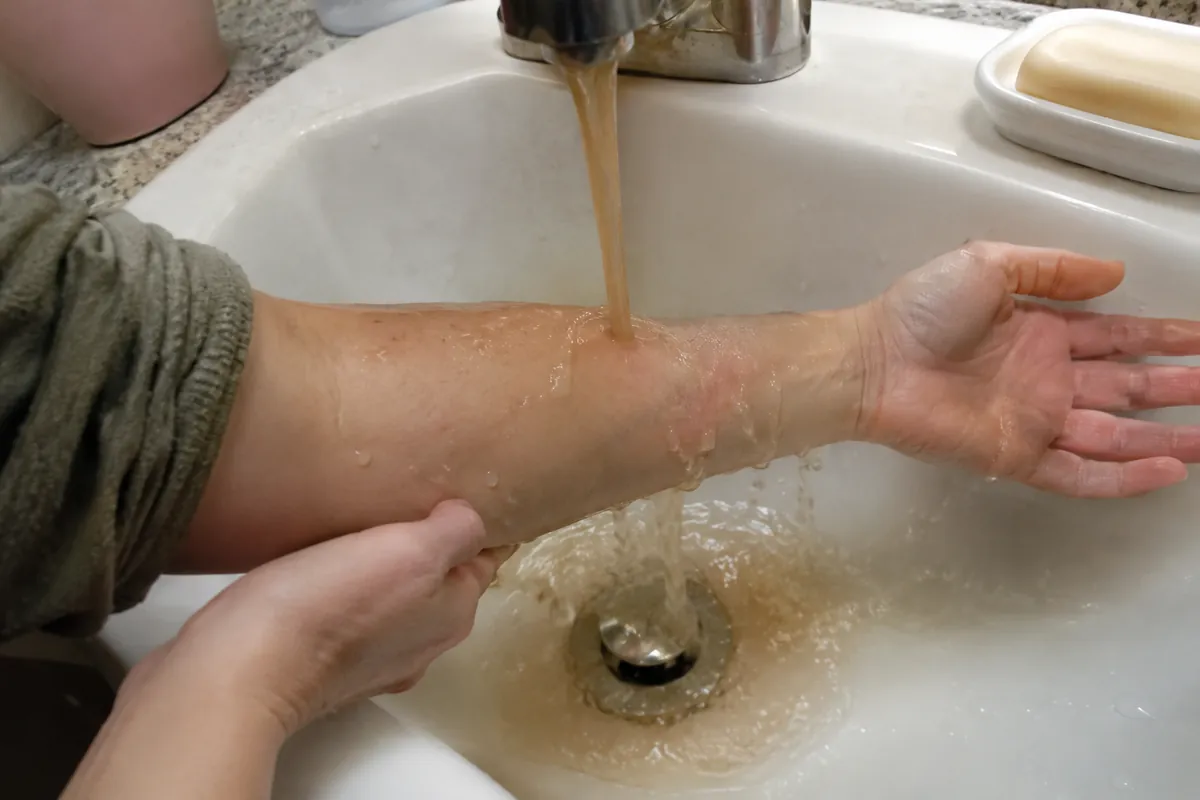
Bondi Sands' UK FAQ gives different development instructions for different self-tanning ranges. Use the schedule belonging to your bottle, including any instruction about when and how to rinse. A surface feeling dry is not an alternative timer, and a guide tint looking dark is not permission to shorten or extend the stated method.
| Observation | Question to resolve |
|---|---|
| I can see where I applied it | Is this formula described as having a guide tint? |
| The surface feels dry | What separate development or rinse directions apply? |
| The color changes after rinsing | When does the maker say to assess this formula? |
Do not diagnose the whole result from rinse water
If the product is designed to be rinsed, visible color in the water can be part of the question you ask the manufacturer; it does not measure how much developed color remains. Follow the named rinse directions rather than repeatedly washing or scrubbing until the skin matches the pre-rinse picture.
Compare at the stage specified by the formula, with similar lighting if you are keeping photographs. Note the application time, rinse time and product version. A picture taken immediately after application and one taken later in another room cannot establish that a treatment failed or that another dose is needed.
A missing application cue is not an instruction to add more
With a clear formula, use the application method on the packaging instead of adding layers until a visible tint appears. With a tinted one, a darker guide area does not identify the exact final shade by itself. The amount and technique still belong to the formula, not to a color target invented during application.
The mousse-versus-drops guide separates mixing and direct application. Keep tool readiness separate as well. The pencil-sharpener guide illustrates why visible residue and equipment condition are different observations, even though its cleaning method does not apply to a tanning tool.
Use product identity when something remains unclear
If the instructions do not explain the change you see, ask the maker about the exact formula with the relevant timing record. Do not infer an expiry date, authenticity or a safe extra dose from an unfamiliar shade. Set aside unclear directions before trying to correct the result with another product.
The same identification habit matters when comparing cosmetic purchases: a lipstick shade name does not prove refill compatibility. Here too, an appearance and a product identity answer different questions. Keep the actual label available rather than relying only on a photograph of the color.
Which stage are you looking at?
Before the scheduled rinse
Treat the visible application tint as a cue, not a final shade measurement.
After rinsing but before the stated assessment stage
Keep the formula schedule instead of adding an automatic extra layer.
I cannot identify the exact formula
Find the label and ask its maker before changing the method.
Avoid a mistaken shortcut
The clear product has no visible guide
Use its directions rather than applying until color appears.
The guide looks darker than expected
Do not infer a new rinse time from that appearance.
Two photographs differ
Compare stage and lighting before interpreting the change.
Questions people ask
Is guide color the final tan?
It is an application cue, not a universal preview of the developed result.
Does every mousse have guide color?
Check the exact formula; format alone does not decide it.
Does dry skin surface mean I can rinse?
Drying and rinse instructions are separate.
Should I add more if a clear formula is hard to see?
Use the stated method rather than adding layers to create a visible guide.
Does colored rinse water prove the tan failed?
It does not quantify the developed result. Follow the product schedule and ask the maker if unclear.
Sources and further reading
- St.Tropez UK: named ranges and guide color
- Bondi Sands UK: formula-specific development directions
- Isle of Paradise: clear and tinted mousse options
Sources checked 2026-10-25.