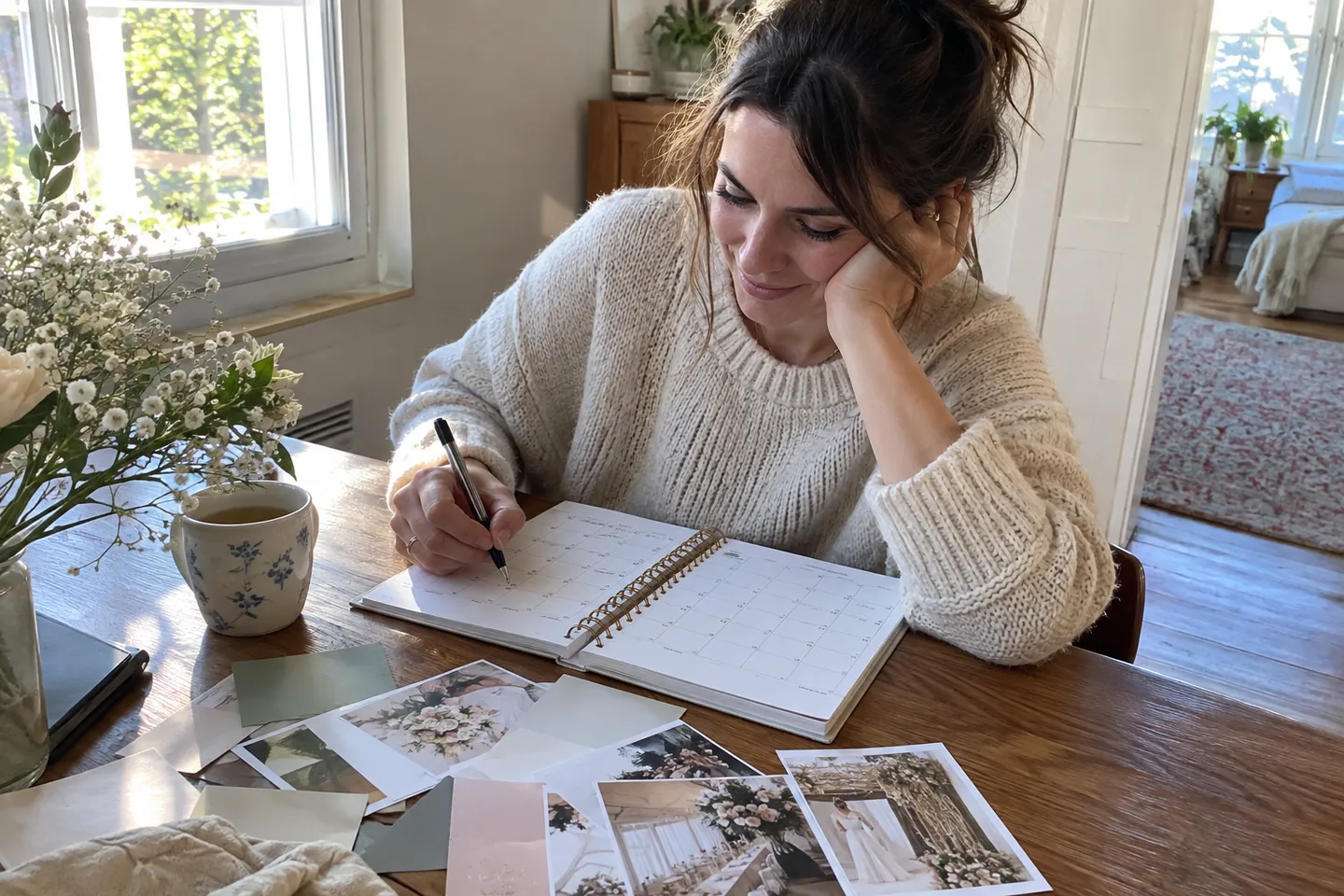
For a wedding morning or a shared getting-ready session, plan real service durations and separate artists around a fixed ready time. The beauty appointment timeline: work back from ready shows its method and lets you keep the calculation.
Set the plan at your own pace
Separate cosmetic appointments from medical treatment. A dermatologist can advise on a skin concern; hair and makeup artists can help plan the look and timing. Do not turn a wedding countdown into a reason to rush a procedure.
Ask artists for examples on people with a similar skin tone and hair type. Check availability and cancellation terms before committing to a package.
Allow time to test and adjust
Book hair and makeup trials with enough room to change your plan. Bring photos of the neckline, veil and lighting. The schedule below is an example, not a deadline that every bride must meet.
For a new skin-care product, AAD describes small-area testing over seven to ten days. This is not the same as clinical allergy patch testing and does not clear a peel, lash adhesive or another procedure.
The final month and final week
Keep products you already tolerate and avoid making a late booking depend on zero recovery time. A clinician should plan any peel or prescription change; do not stop a prescribed treatment because a wedding checklist says so.
Rehearse the morning timing and keep a small touch-up kit. Check hygiene and eye-area directions for anything near the lashes, and use sun protection appropriate to the day's exposure.
Include applicator care in the event kit plan
If self-tan is part of your own preparation plan, identify the applicator and its care needs during the earlier trial. Record which tool goes with the chosen formula and where its instructions are kept. The kit plan should include its availability after washing and drying, rather than assuming that every tool will be ready when a new application is scheduled. Do not introduce an unfamiliar substitute solely because the original is still drying.
Keep the product’s development and rinse directions separate from the tool-care note. Ask a service provider what you should bring to an appointment instead of preparing shared equipment with a home cleaning recipe. If you pack a spare, confirm that it is the right kind of applicator and ready under its own directions. A calm preparation plan leaves room to resolve an equipment question before the event, without promising a universal result or timeline. The tanning-mitt care guide keeps these decisions separate.
Your bridal timeline
- 12 weeks out Skin review and treatment plan This week
- 9 weeks out Book hair and makeup artists In 3 weeks
- 6 weeks out Review product testing and treatment advice with the provider In 6 weeks
- 3 weeks out Hair and makeup trials In 9 weeks
- 1 weeks out Keep the familiar routine; confirm recovery and aftercare In 11 weeks
- 0 weeks out Dry run of the morning timing In 12 weeks
You have 12 weeks. Items marked as passed may already be done or no longer apply.
Questions people ask
When should I book a makeup trial?
Two to three months before the wedding, so there is time to change the shade or the technique if needed.
Should I have a facial the week before?
There is no universally safe last-minute facial date. Discuss the exact treatment and recovery with its provider, especially for peels or anything new to your skin.
Sources and further reading
- American Academy of Dermatology: testing skin care products
- American Academy of Dermatology: chemical peel FAQs
Sources checked 2026-10-25.