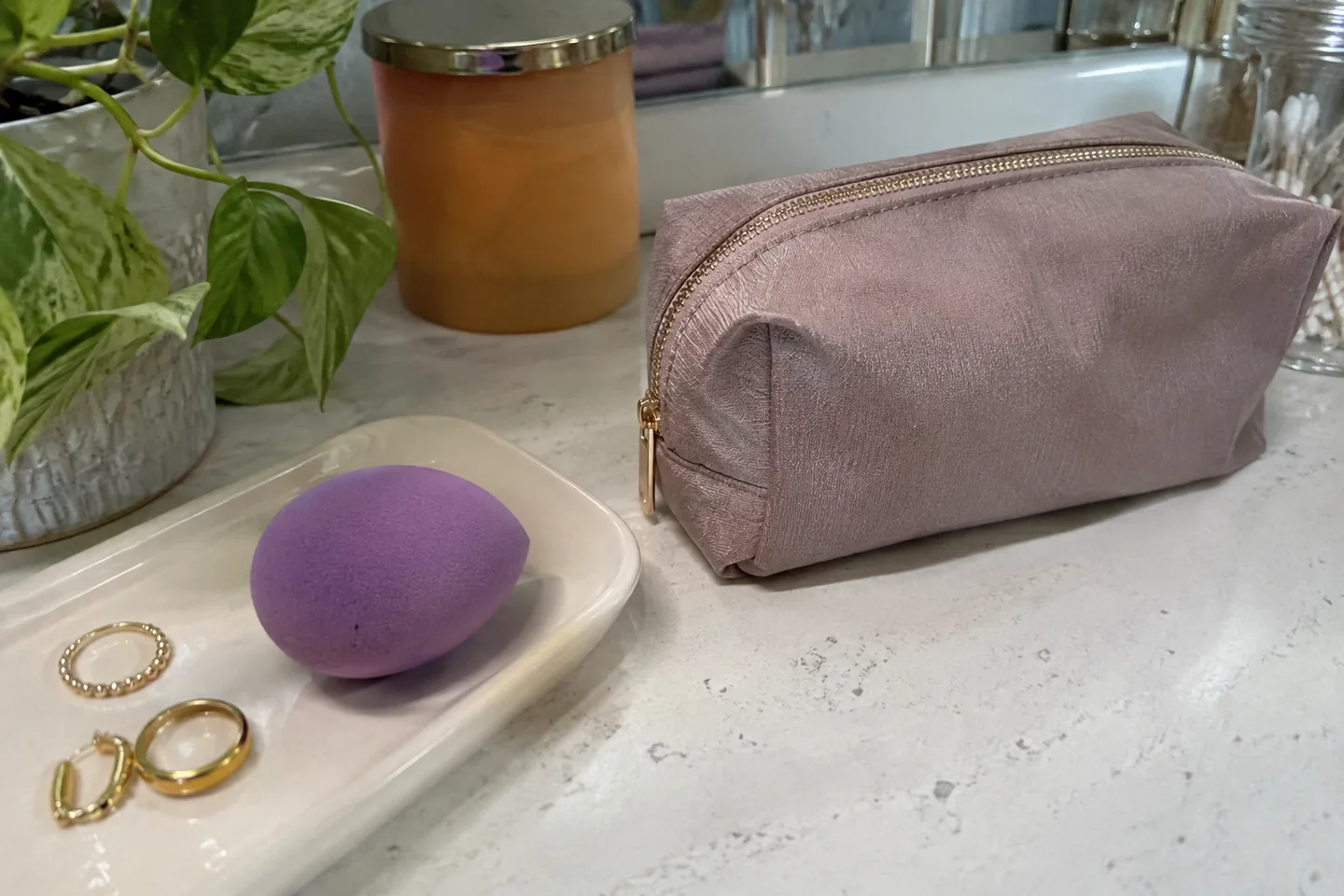
What should you do before the next application?
Put the sponge aside and use a clean familiar applicator suited to the formula. Do not pass the questionable sponge to someone else or cover the smell with a fragranced spray. If you are away from home, changing the application plan is more useful than trying an improvised treatment in a hotel sink.
Identify the model from its packaging or purchase record. Note when the smell first appeared: before washing, after washing or after storage. That sequence can help you ask the maker a precise question. It does not prove whether the source is the sponge, remaining product, cleanser or container.
What do the manufacturer’s instructions actually say?
Beautyblender’s refresh-or-replace guide distinguishes cleaning needs from signs that its sponge needs replacing. Read the directions for your actual applicator rather than applying one brand’s advice to every foam material. A shape or color resemblance does not establish identical care requirements.
Replacement intervals also belong to specific products. Real Techniques lists weekly deep cleaning and replacement every 30 days for its Miracle Complexion Sponge. This is not a universal lifespan for all sponges. Condition concerns still need attention before a calendar reminder, and reaching a date is not a reason to diagnose what caused an odor.
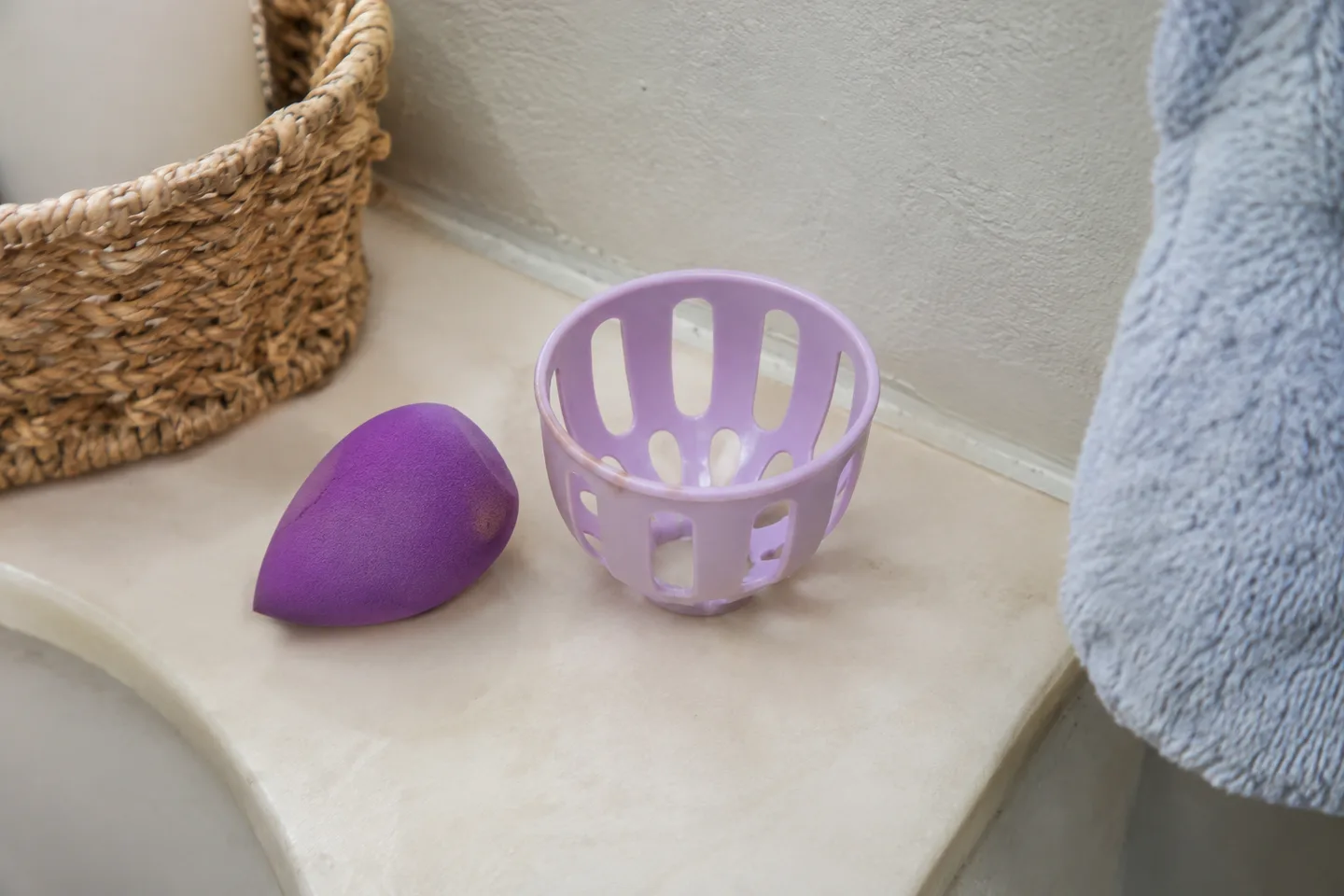
Inspect three items separately
| Item | Record |
|---|---|
| Sponge | Model, visible damage, change in texture and when the odor appeared |
| Cleaner | Exact product and whether its use followed the sponge instructions |
| Holder or pouch | Residue, condition and its own cleaning and drying instructions |
A clean sponge placed back in a soiled holder is an incomplete routine. Conversely, cleaning the holder does not establish that the sponge is ready. Our makeup bag cleaning guide treats the surrounding container as its own care task.
Should you wash it again?
Only use the cleaning method specified for the tool, and do not keep escalating to harsher recipes if a concern remains. Household bleach, boiling, microwaving or soaking in an unknown mixture are not interchangeable with the manufacturer’s directions. Ask about the exact model if those directions are missing.
EcoTools’ FAQ supplies different care guidance for its different tools. That distinction matters: a cleansing mitt, cosmetic sponge and brush are not one material. Record what you already tried before contacting the maker so the answer addresses the current condition.
Why does drying and storage need its own plan?
Follow the maker’s drying directions before storage. Do not assume a fixed overnight interval works in every room or that holes in a case guarantee drying inside a full bag. The travel-case checklist compares the case and sponge as a pair rather than treating any ventilated container as universal.
For an early departure, prepare another applicator in advance. Leave time to unpack and inspect tools at arrival. A reminder in your beauty schedule can help, but it cannot establish dryness or condition without checking the actual item.
When should you choose replacement or contact the maker?
If the odor persists, the foam has changed or the instructions do not resolve your concern, keep the sponge out of use and ask the manufacturer about replacement. Do not treat an improved smell as proof that every problem has gone. A photograph cannot certify what is inside a sponge.
Save the model, purchase date if known, care method and a brief condition note. Avoid a claim such as “mold confirmed” based only on a dark mark or odor. The replacement guide separates product dates from condition checks; a tool and the foundation used with it can require different decisions.
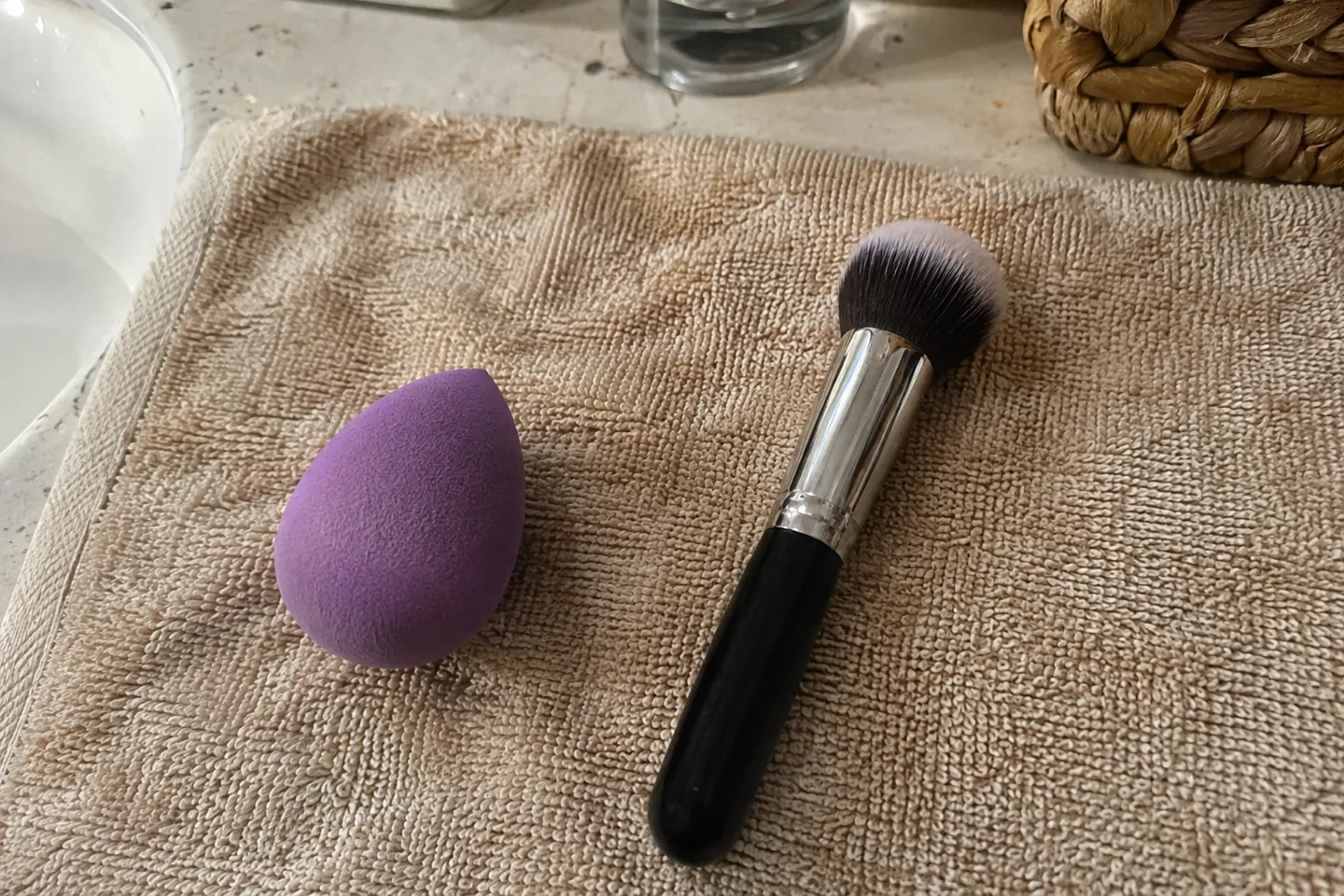
Choose the next step
Unexpected odor before use
Set the sponge aside and choose a clean familiar alternative.
Care directions are missing
Ask the maker about the exact model.
Concern remains after instructed care
Keep it out of use and ask about replacement.
What information is missing?
Unknown tool model
Check packaging or purchase record.
Unknown storage conditions
Inspect holder and pouch separately.
Unknown care history
Record what you remember without inventing a schedule.
Questions people ask
Does smell identify mold?
No. Do not diagnose the cause from odor alone.
Can fragrance make the sponge ready to use?
Masking odor does not establish its condition.
Does every sponge last 30 days?
No. Intervals depend on the exact product instructions.
Should the case be cleaned too?
Check its own care directions separately.
Can I use a brush instead?
Use a clean familiar applicator suitable for the formula.
Sources and further reading
Sources checked 2026-10-25.