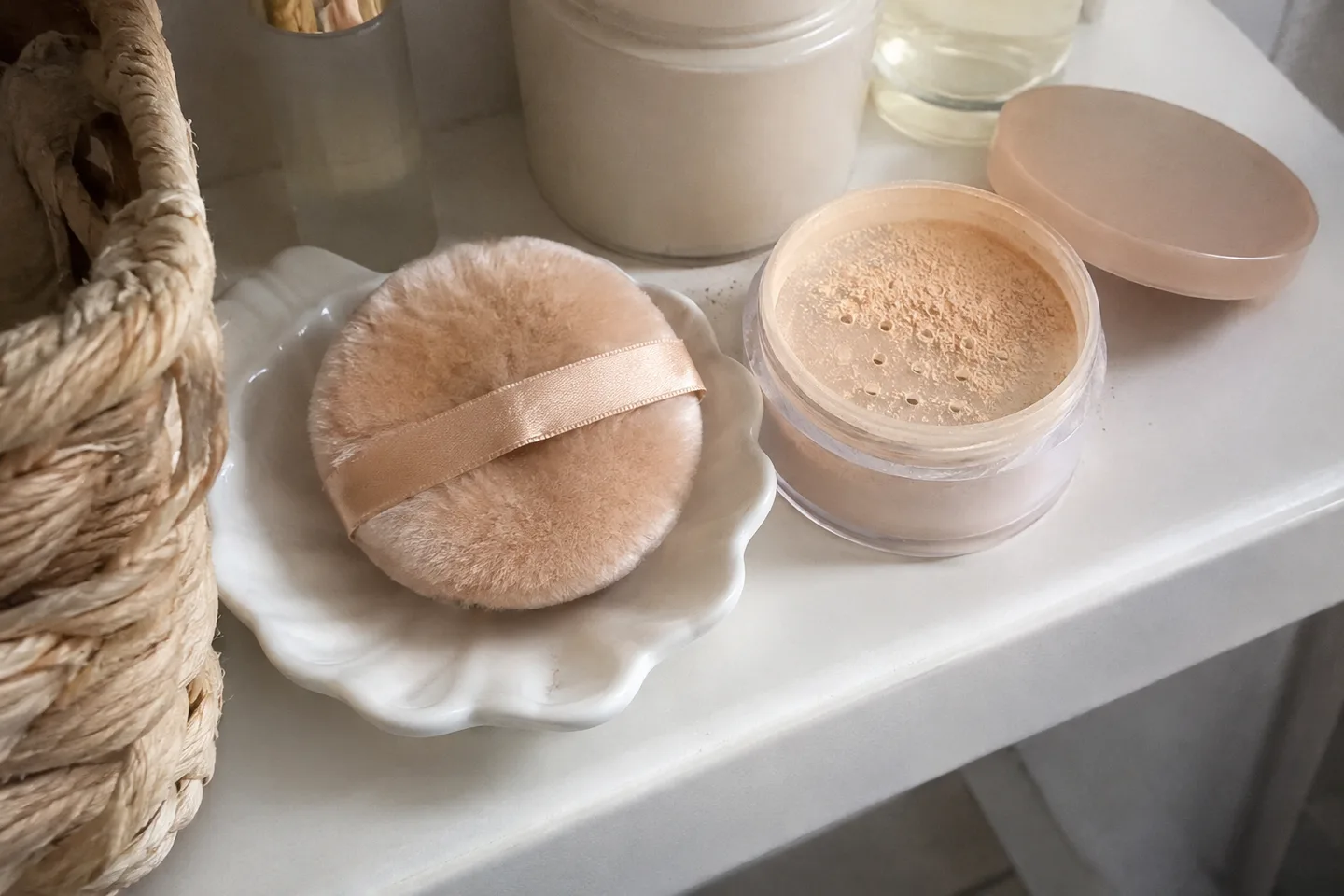
Which kind of puff do you have?
Start with the material, not the shape. A flat velour puff, a loose cotton puff and a foam-like one are different textiles. Check the packaging, the product page you bought it from or the tag on the ribbon. If none of these says what it is, treat the puff as unidentified and ask the maker rather than guessing a wash.
Note also what it carries. A puff used with loose setting powder collects dry residue; one used with a cream product holds oils. The residue type changes how it feels, but only the maker can say what cleaning it tolerates.
Do brands agree on water and soap?
They do not. Sephora's listing for Laura Mercier's velour puff describes mild soap, washed by hand or in a lingerie bag, while Grimas describes hot soapy water for its velour puff. Pages change, so read the current directions for yours. The difference matters: advice written for one product is not a rule for every puff, and warm or hot water that suits one cotton puff may not suit another material.
If the label is gone, choose the gentlest option the maker would plausibly allow and stop if the fabric loses shape. Do not use a household stain remover or a harsh cleaner on something that sits against your face.
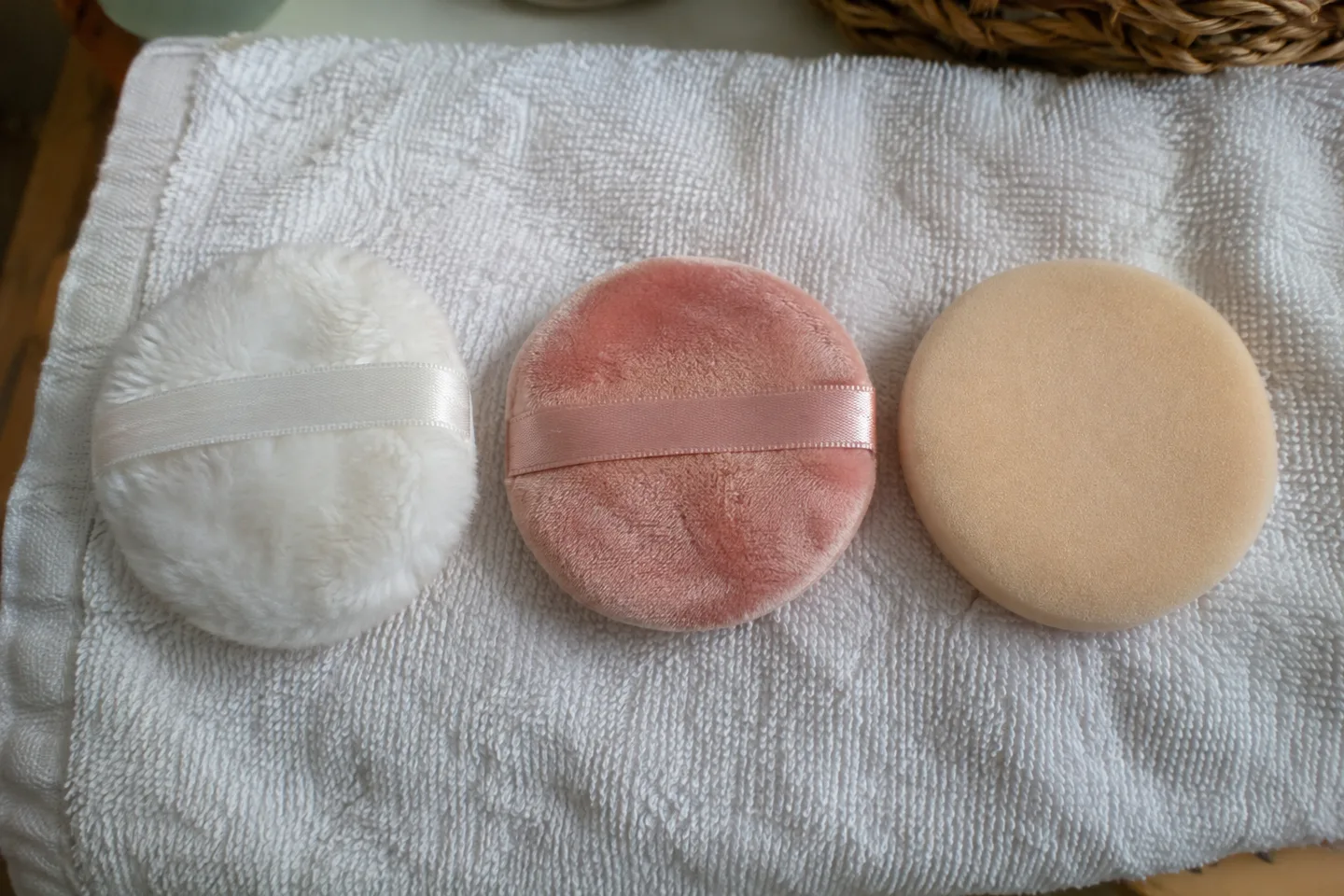
A material-first record
| Item | Record |
|---|---|
| Material | Velour, cotton, foam or unknown; source of the information |
| Care text | Water temperature, soap, machine or hand wash, as stated by the maker |
| Condition | Flat or matted pile, ribbon fraying, odor, stains that remain |
This record is a proposed routine, not a test of any one puff. It lets you compare what you were told with what you see, and it is useful if you later contact the maker about a damaged or odorous puff. For the handle-and-bristle side of the kit, our makeup brush cleaning guide treats a different set of materials.
How should you plan the drying?
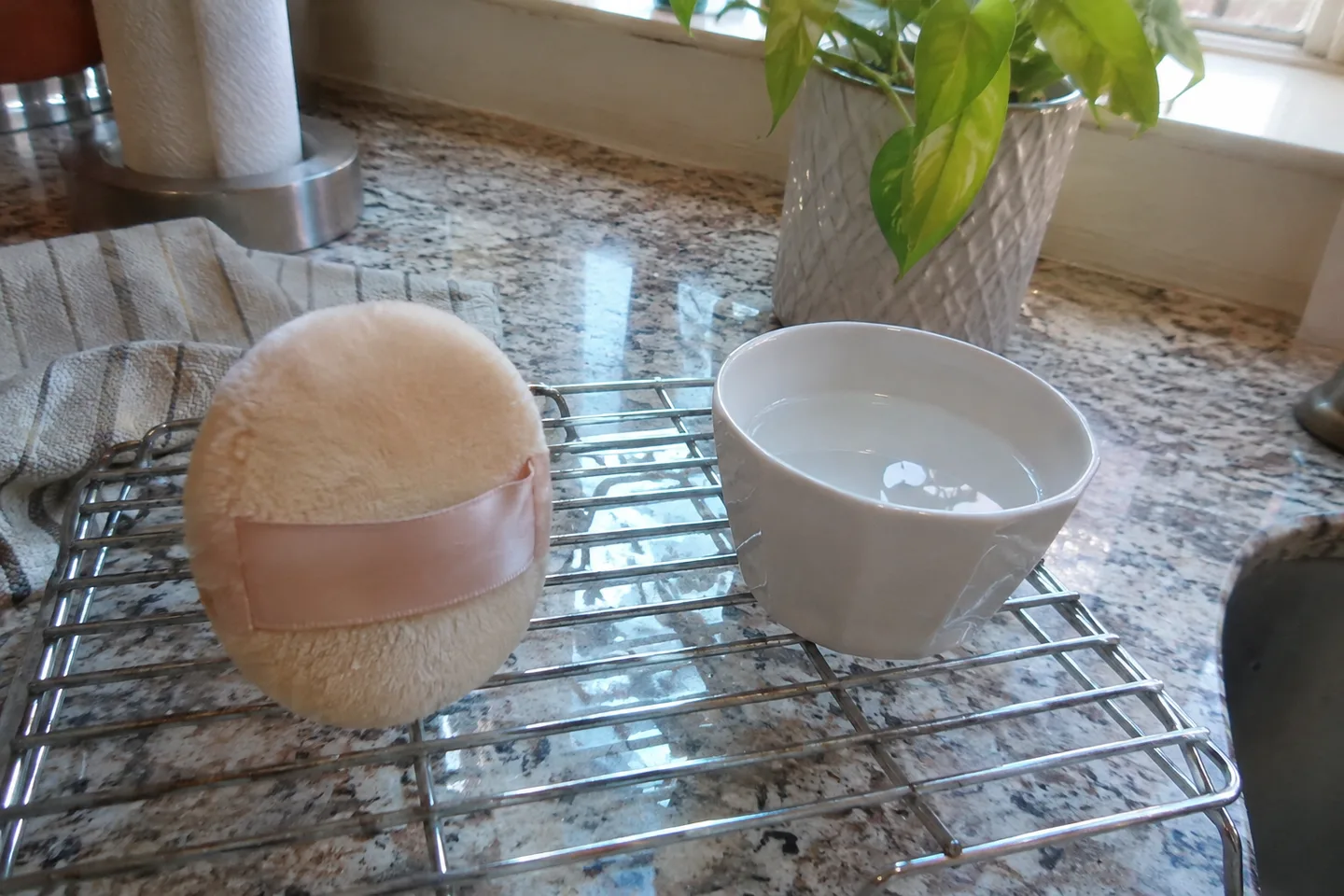
Drying is part of the clean, not an afterthought. Decide where the puff will rest before you wet it: on a clean towel or a rack with air around it, away from direct heat. Press out water without twisting hard, and reshape the pile gently. Do not put a damp puff back into a closed compact or pouch to finish drying; give it time and check that the center feels dry too.
If you use the same powder every day, keep a second puff so the first has time to dry fully. The wet or dry sponge guide explains why a different applicator needs its own handling, so do not carry one tool's routine over to another.
When is it time to replace the puff?
Replacement follows condition and the maker's guidance, not a fixed rule. A puff that stays matted, smells after washing, tears at the ribbon seam or sheds fabric is a candidate to retire. Our replacement guide separates dates on products from condition checks; apply the same idea to the tool.
Keep the model, where you bought it and any care text you found. If skin feels irritated after using a puff, set it aside and ask a professional about the skin rather than blaming the tool or assuming a wash will fix it.
What does your puff need?
The material is unknown
Look for the packaging or product page, or ask the maker before washing.
The label is clear
Follow its water, soap and drying directions exactly.
The pile is matted or smells after care
Retire it and use a clean spare.
What is missing from your record?
Material not written down
Note it from the tag or packaging.
Care text not found
Ask the maker, not a general guide.
Drying place not chosen
Pick a rack or towel before you wet the puff.
Questions people ask
Can all powder puffs go in the washing machine?
No. Follow the maker label; some mention a lingerie bag, others only hand washing.
Is hot water safe for a puff?
It depends on the product. Brands differ, so check the care text for your own puff.
How do I dry a puff?
Rest it on a clean towel or rack with air around it, away from direct heat.
Can I clean a puff I used with cream product?
Read the care text for that material; oils and powder residue behave differently.
When should I replace it?
When its condition changes or the maker advises, not on a fixed calendar date.
Sources and further reading
Sources checked 2026-10-25.