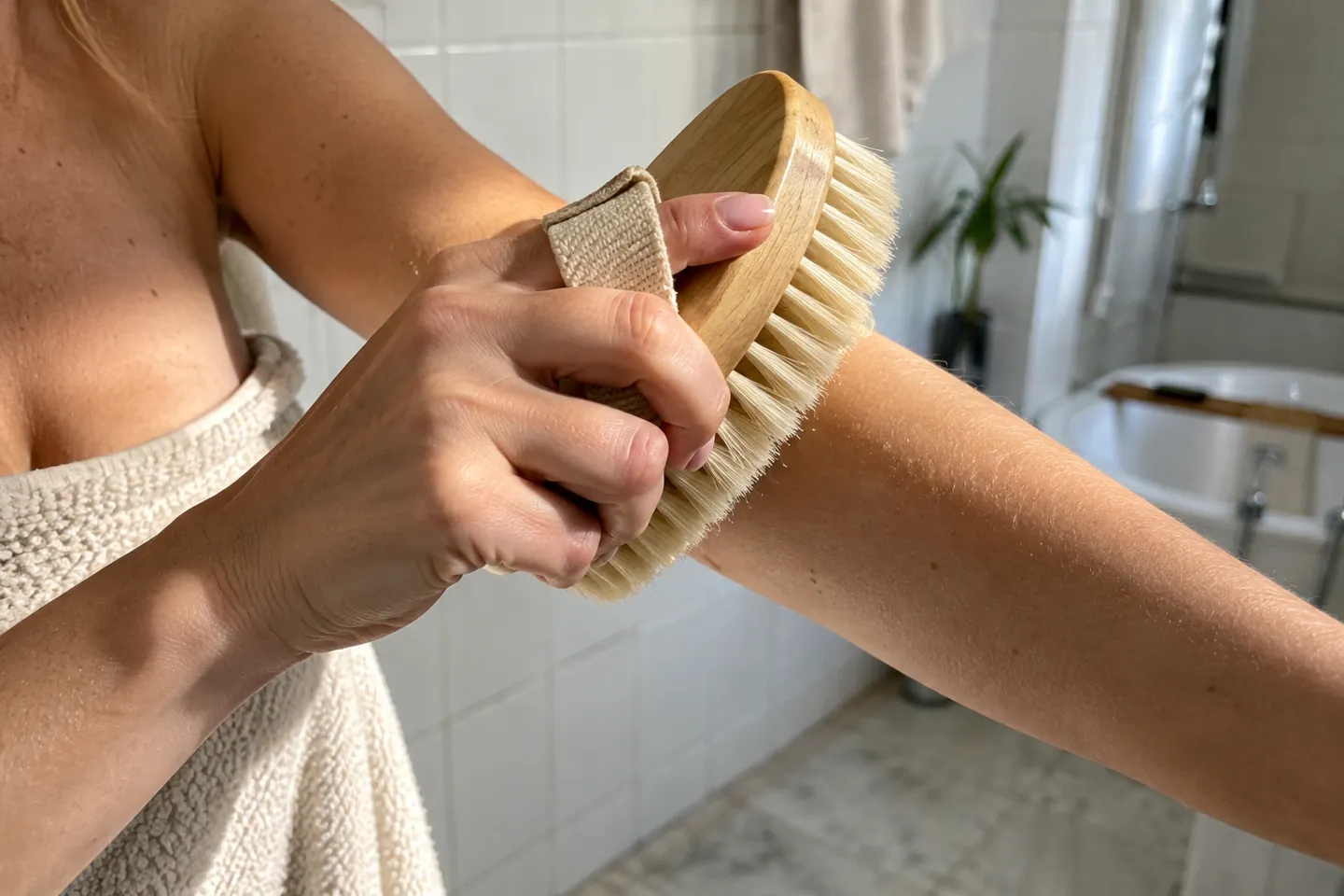
What a brush does
A brush mechanically removes some surface cells. That does not establish detoxification or a lasting change in cellulite. Keep the goal small: deciding whether your skin feels comfortable with this form of exfoliation.
A gentler starting point
AAD recommends short, light strokes when using a brush or sponge. Do not work toward a required stroke count, redness or ten minutes of friction. Direction toward the heart is not proof of a detox effect.
Moisturise afterwards. Stop if the skin becomes irritated; a burning feeling is not a sign that the treatment is working.
Frequency follows the skin
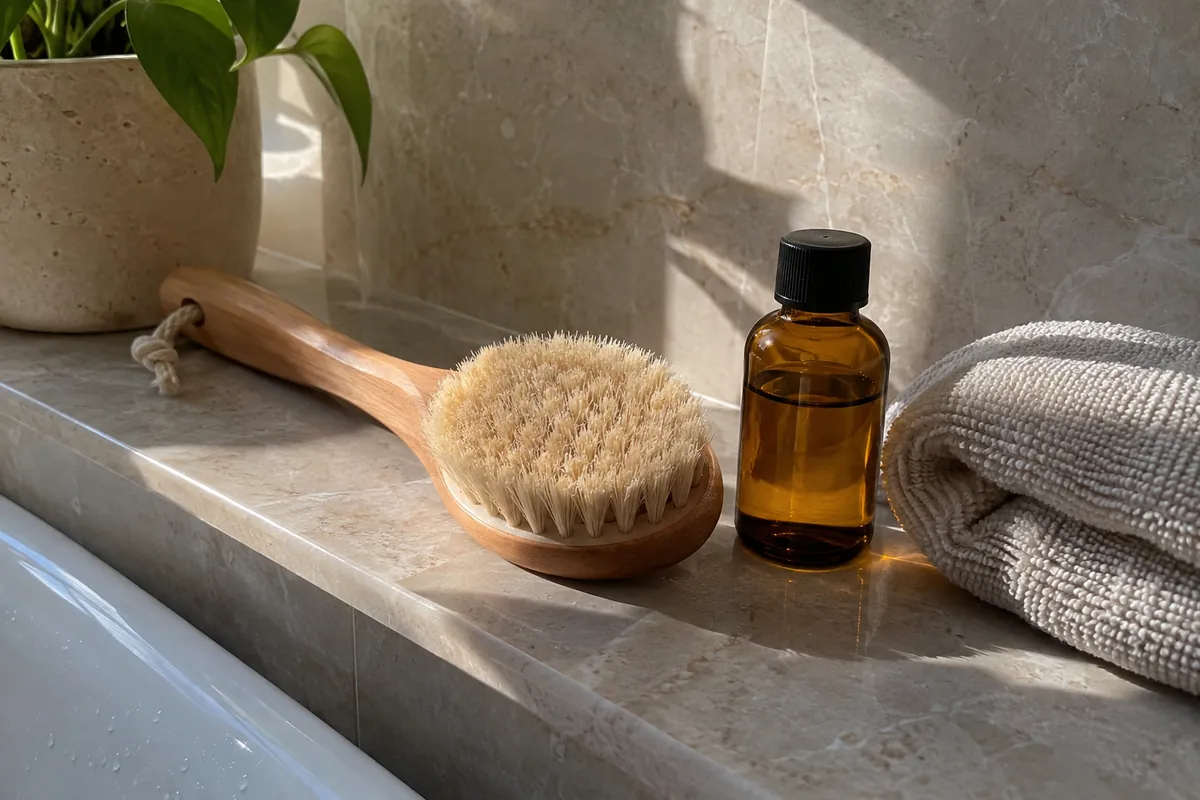
There is no schedule that suits everyone. AAD relates frequency to skin type and the strength of exfoliation, with more aggressive methods used less often. Dry or sensitive skin may find a brush too irritating.
Do not exfoliate wounds or sunburn. Ask a dermatologist about active skin disease or exfoliating alongside products that already cause peeling.
Choose comfort over the marketing
A firm brush is not automatically better than a soft cloth. Choose a tool you can use lightly, clean and dry according to its instructions. No purchase is needed if your existing routine keeps your skin comfortable.
Before deciding to brush
0 of 6 done
Questions people ask
Does dry brushing remove cellulite?
This guide has no evidence that brushing creates a lasting change in cellulite. Exfoliating the surface and changing deeper tissue are different claims.
Must I brush for ten minutes?
No. A fixed duration is not a target; unnecessary friction can irritate skin.
Can I brush an inflamed ingrown hair?
Do not scrub an inflamed or damaged area. Ask for advice when a painful bump persists.
Sources and further reading
Sources checked 2026-10-25.